

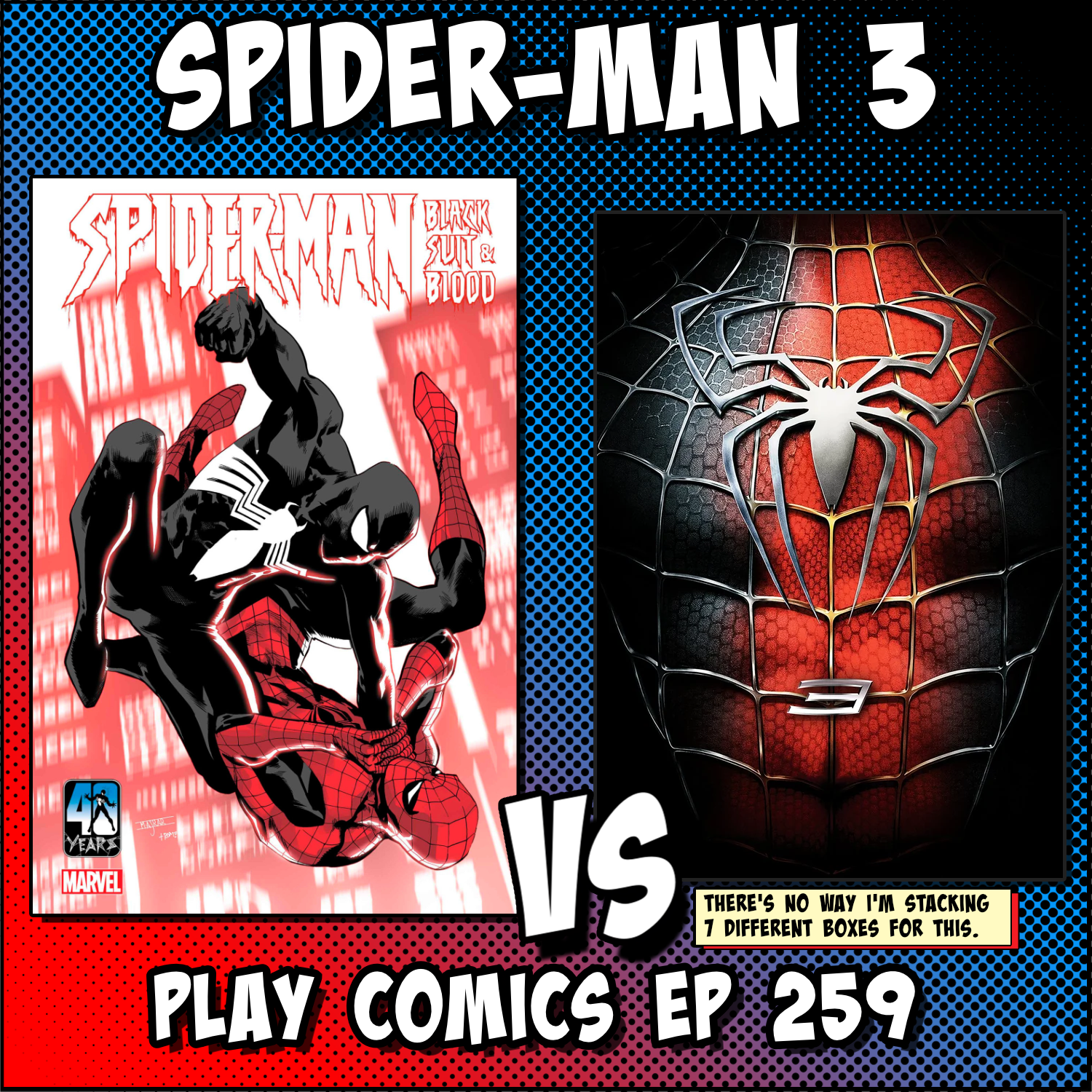
Let’s talk about Spider-Man 3, the movie where Sam Raimi looked at “menacing single antagonist” and said no thank you, I would like three, please, and also I would like Peter Parker to dance down the street like he’s auditioning for a jazz-hands cult. It’s a movie that tried to do everything, mostly succeeded at doing too much, and somehow still made enough money that Activision looked at it and thought: yes, this deserves not one video game, but two, spread across seven different consoles, so that literally nobody in 2007 could escape it. Ambitious! Chaotic! Extremely on brand for the source material!

See, there’s the fancy version, built by Treyarch for PS3, Xbox 360, and PC, where you get a whole open Manhattan to swing around in and the black suit shows up only when the story deems you emotionally ready for it, very mature, very earned. And then there’s the completely different budget cousin, built by Vicarious Visions for PS2, Wii, PSP, GBA, and DS, where you can slap the black suit on whenever you feel like being a jerk, the Wii Remote gets to pretend it’s a web-shooter, and the DS throws the D-pad in the trash entirely so you can beat up Sandman by poking a touchscreen like it owes you money. Same cover art. Same villains. Practically strangers.

Swinging in to help me sort out how many wildly different versions of one questionable movie a single franchise can generate is Harry Steele, co-host of Games on Film, the podcast where he and his brother Rory spend their days grading movies based on video games! Which means Harry has built an entire professional skillset around asking “did Hollywood mess this up,” and today, for one glorious episode, we get to point that same energy directly back at a video game and ask if it managed to mess up the movie right back. Poetic justice! Content symmetry! Whatever you want to call it, it’s happening!

So grab whichever suit you’re feeling today, pick a console, any console, apparently they all made their own decisions, and let’s find out if the Spider-Man 3 games handled three villains and seven platforms with any more finesse than the movie handled three villains and one dance number.Continue Reading
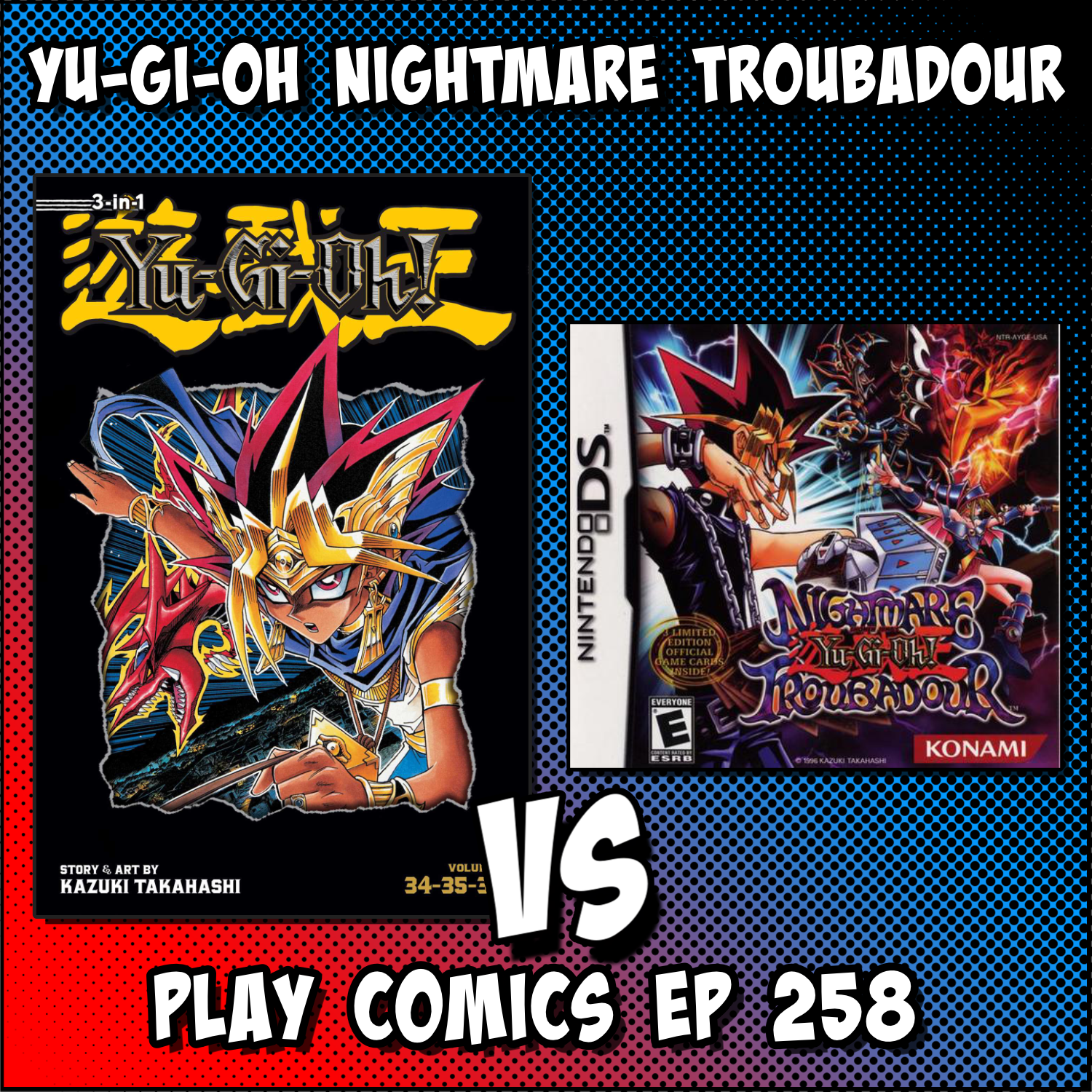
Video game licensing runs on a very simple equation: if a popular franchise exists, and a handheld system exists, someone will eventually put a game together and slap on a release date. That’s probably the story behind Yu-Gi-Oh! Nightmare Troubadour, with Konami treating the whole affair with the enthusiasm of checking a box on an extremely profitable to-do list. It was the franchise’s first outing on the Nintendo DS, arriving with the confidence of a company that already knew the math worked.

The pitch itself barely needed a pitch meeting: take the actual Duel Monsters card game, cram in over a thousand cards, and let the DS’s two screens do what a real card table always wished it could, which is render your monsters in flashy 3D up top while the actual decision-making, deck construction, knowing what a Trap Card does, happens down on the touchscreen below. The story loosely resets you into a remixed version of a Yu-Gi-Oh tournament arc, because apparently even a game that’s essentially “trading card simulator” still needed somebody to kidnap somebody, and wireless dueling and card trading rounded things out for anyone who wanted to bankrupt a friend without leaving the couch.

Making the trip through Battle City with me is The Gaming Anthropologist, who’s been out in the field studying gaming culture the way some people study a subject that actually pays.

So build your deck, set a face-down card of your own choosing, and let’s find out whether Nightmare Troubadour actually captured what made Duel Monsters worth dueling over, or whether “the license existed and so did the hardware” was doing all the heavy lifting.Continue Reading

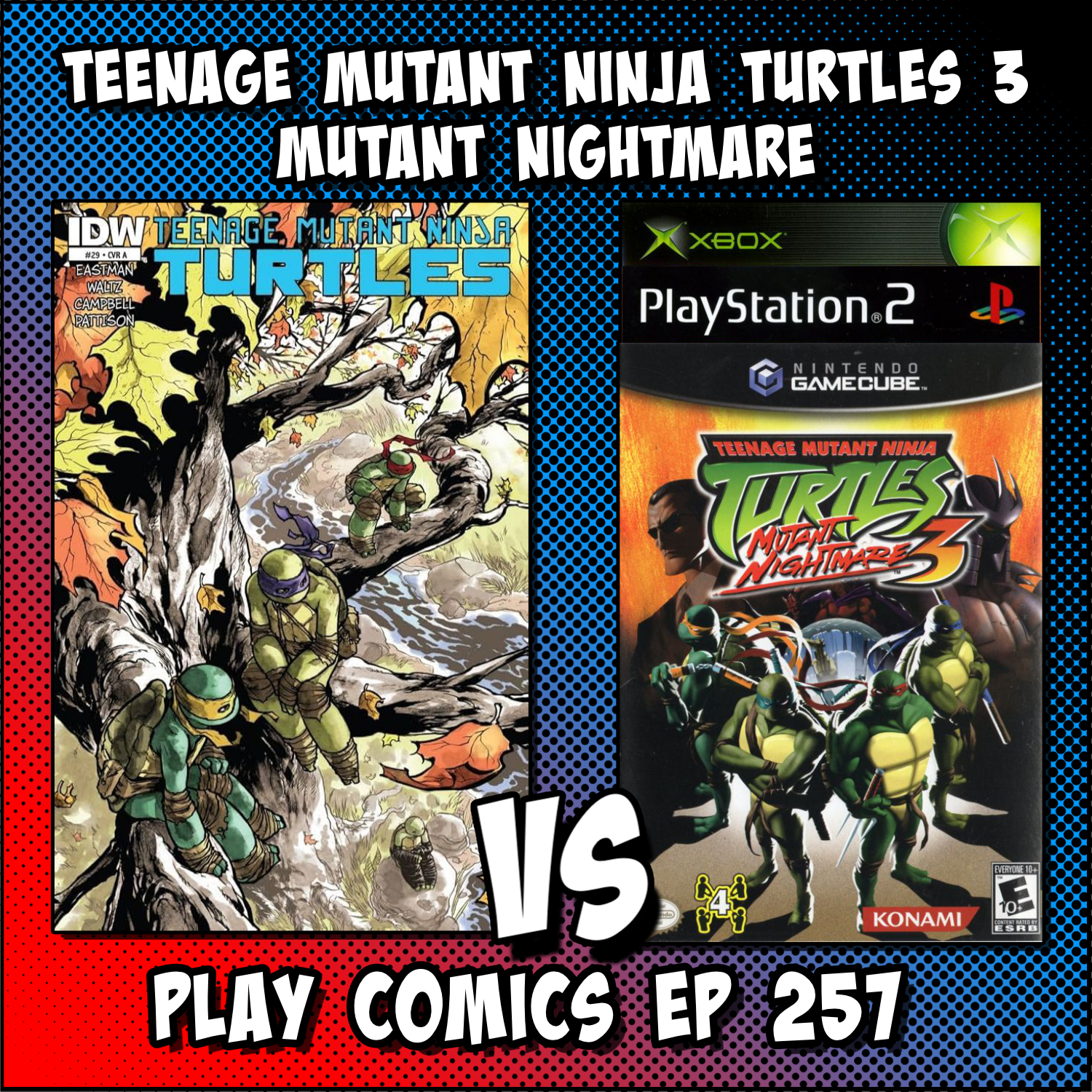
By 2005, Konami had made three TMNT beat-em-ups based on the 2003 animated series, which is the kind of commitment usually reserved for tax filings or long-term relationships. Teenage Mutant Ninja Turtles 3: Mutant Nightmare landed that November on GameCube, PS2, Xbox, and Nintendo DS as the trilogy’s closer, and Konami sent it off in style by giving it the series’ first E10+ rating, as if four years of shell-based violence had finally crossed some invisible threshold of Too Much.

The game loosely adapts the show’s third season across four “Episodes,” which means the Triceratons invade Earth, Agent Bishop kidnaps Splinter for reasons that presumably made sense to somebody in a government facility somewhere, and Shredder shows back up to remind everyone that retirement isn’t really a thing that happens to ninja warlords. Along the way you can pour experience points into skill scrolls, transform into a Dino Turtle or an Ultimate Turtle depending on the mood, and, if you clear the first Episode, unlock a modified version of the 1991 arcade classic Turtles in Time, which is Konami’s way of saying “here’s the good one, in case this one doesn’t land.”

Joining me to sort the Triceratons from the Foot Ninjas is Pierce Lydon of Spawnography, the podcast where he and George Marston work through Todd McFarlane’s entire Spawn mythology one hellish arc at a time. Pierce has already survived one trip through the Play Comics gauntlet with me on Spawn in the Demon’s Hand, so they know exactly what they signed up for this time: showing up, being extremely knowledgeable, and getting talked into yet another licensed beat-em-up nobody asked for.

So grab a ninja scroll, pick a turtle, any turtle, and let’s find out whether Mutant Nightmare sent Konami’s turtle trilogy out on a high note, or whether the Triceratons should’ve just stayed home.
Continue Reading

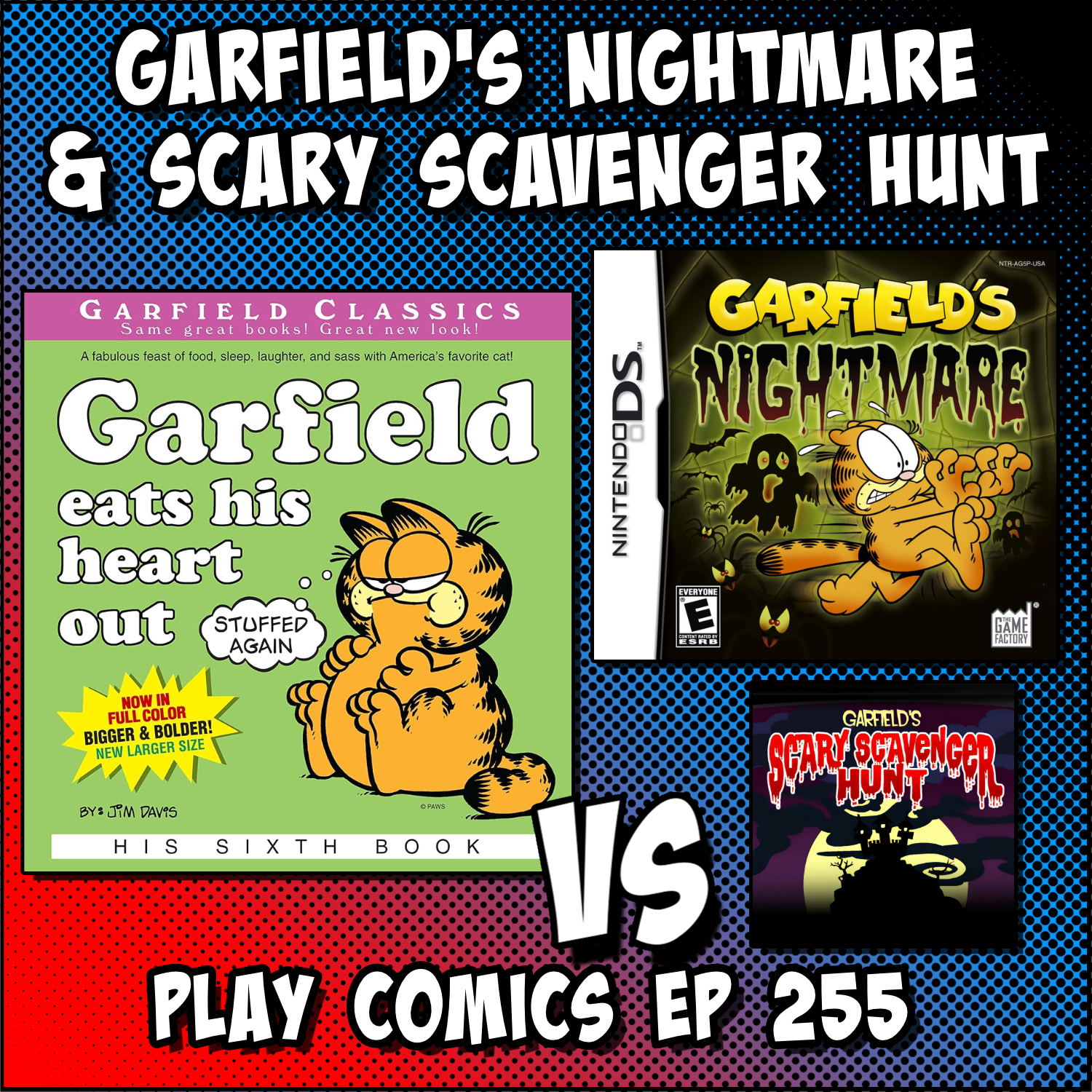
Garfield has spent I don’t want to think about how long being terrified for our entertainment, and somehow this is only the second time we’ve noticed. Today we’re looking at two occasions Jim Davis’s laziest creation got shoved into a horror plot he absolutely did not sign up for: Garfield’s Nightmare on the Nintendo DS and Garfield’s Scary Scavenger Hunt, the Flash game that lived on Garfield.com back when “Flash game that lived on a dot-com” was still a sentence people said out loud.

Helping us make sense of not one but two instances of “cat, but afraid” is Dee Parson from Supr Dee, the syndicated cartoonist behind Rosebuds. A guy who, by his own account, actually learned to read on Garfield comics, which means this episode is less “guest booking” and more “the student returns to grade the source material’s video game output.”

So lock the pantry, keep an eye on the Scare-O-Meter, and let’s find out if either of these games earned the right to scare a cat who once ate an entire sandwich made of other sandwiches.Continue Reading

Somewhere in the mid-2000s, a group of developers looked at the Justice League and said, “What if we made a game where all your favorite heroes team up… and then we just kinda vibed with that idea instead of sticking to any specific comic storyline?” Which kind of works actually because they got Dwayne McDuffie to write it but that’s not the point. So anyway, Justice League Heroes burst onto the scene for PS2, Xbox, PSP, and Nintendo DS like a Watchtower alarm that nobody remembers installing.

This week on Play Comics, we grab our capes, charge up our vaguely canon-adjacent superpowers, and dive into a game that absolutely has Batman, Superman, and friends… ummm, friends are definitely there I promise and sometimes they have to be there because of contractual obligations. And sometimes even the best version of those friends if you’re lucky and the best version of that hero had been invented already.

Joining the adventure is Gavin Mevius from The Mixed Reviews and The Q Division, bringing along just the right blend of insight, chaos, and “wait, was that ever a comic plot?” energy to help us make sense of it all.

So get ready for teamwork, button mashing, and a Justice League game that is just kind of meh, especially considering the story that it had to work with.Continue Reading

Listen up, mutation enthusiasts and multi-platform adventurers, because this week on Play Comics we’re strapping on our Kevlar suits and diving straight into the bewildering, beast-infested, cross-console chaos of X-Men: The Official Game! We’re talking about the 2006 game that launched on practically every system known to mankind (GBA, GameCube, Nintendo DS, PS2, Xbox, and Xbox 360. Seriously, did they forget a platform?), which based the story nominally on the third X-Men film from Fox. You know, the one that showed us what happens when Professor Xavier and Magneto finally decided to outsource their beef settlement to a video game developer.

This particular romp through Marvel’s merry mutant universe was brought to you by the folks who looked at a film featuring Wolverine, Nightcrawler, and Iceman and thought, “What if we made this game SLIGHTLY different on each platform?” It’s like they were challenged to see just how elastic the definition of ‘the same game’ could be, and frankly, the results are beautifully inconsistent. The story was co-written by Chris Claremont (yes, THAT Chris Claremont) and Zak Penn, and it featured voice acting from the actual film cast, which means you got Hugh Jackman’s growl in your living room, your handheld, and probably also your neighbors’ living rooms at 2 AM.

Joining us to make sense of this portable and stationary pandemonium is none other than Alex Zalben from Comic Book Club, a weekly live talk show about comics that’s been running since 2006, performed at every major comic convention you can think of, written up in the New York Times more than once, and hosted literally hundreds of guests with more swagger than most podcasts muster in a lifetime. Alex is a writer, editor, and podcaster who knows his way around both four-color storytelling and video game adaptations, making him the perfect guide to help us determine whether this cross-generational, cross-console adventure managed to capture what makes the X-Men actually work, or if it just made us wish we could teleport away from our screens.

So sync up your Danger Room protocols, pick your favorite handheld or home console, and get ready for an episode that’s guaranteed to be more chaotic than a Sentinel factory explosion and infinitely more confusing than trying to figure out why THIS game exists on THAT console!Continue Reading

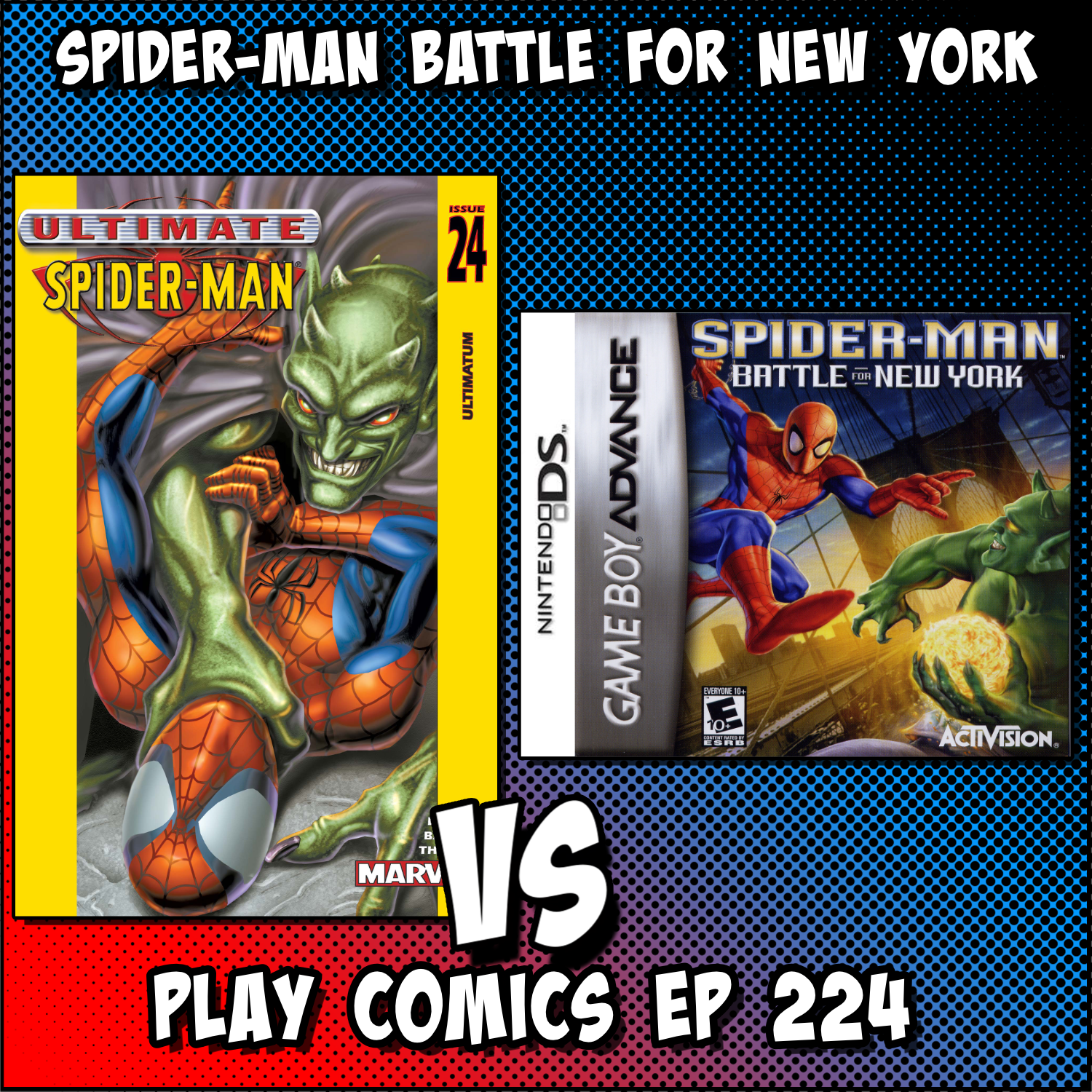
Welcome, web-slinging console warriors and handheld hop-scotchers! Prepare your cartridges and grab your controllers, because this week on Play Comics we’re diving into the gloriously chaotic streets of New York with Spider-Man: Battle for New York, the 2005/2006 portable powerhouse that took Brian Michael Bendis and Mark Bagley’s Ultimate Spider-Man universe and somehow crammed all of Manhattan’s mayhem into a GBA and DS-sized punch-up bonanza. Because apparently, someone looked at one of the most beloved comic runs of the 2000s and thought, “You know what this needs? A brawler where Spidey spends most of his time frantically hammering the same three buttons while dodging increasingly ridiculous villain attacks.”

Released across Game Boy Advance and Nintendo DS, this wasn’t your typical web-slinging adventure—it was more like someone distilled all of Ultimate Spider-Man’s most explosive moments into a side-scrolling arcade experience where the city itself becomes just as much of an enemy as Green Goblin ever was. With a roster of villains pulled straight from the comics and more “beat stuff up” objectives than you can shake a web at, this game proved that sometimes the best way to honor a beloved comic series is to completely reinvent what it means to be Spider-Man.

This week, we’re absolutely thrilled to welcome the phenomenally knowledgeable Jarrett Tyree from Has To Do With Spider-Man I Think, who brings an encyclopedic understanding of all things Arachnid and animated to help us untangle whether this game managed to capture the kinetic energy of Bendis’s run or if it just left our webbing all tangled in the wrong places. Jarrett’s the kind of Spider-expert who can probably explain exactly why this game makes the choices it does, while also gently reminding us that sometimes video game adaptations are more “inspired by” than “faithful to” the source material.

So strap in your web-shooters, prepare for some serious button-mashing mayhem, and get ready for an episode that explores whether this dual-platform adaptation is a hidden gem of portable gaming or just another case of “well, we had to do SOMETHING with this license.” Let’s see if Battle for New York is worth defending!Continue Reading

It all comes back to Spider-Man doesn’t it? The cultural saturation of the character in a lot of English speaking societies. The relatable nature of the character (and to be perfectly honest, most of the Spider people characters). The fact that the first Spider-Man trilogy was the first thing since the 90s Batman movies to really hit such a mainstream audience is no coincidence.

So how do we get a look at what Spider-Man means to people? Oh, I don’t know, maybe get a guest like Keifer from Select and Start to come and give us a look at what both this 2004 game and the movie that it ties in with? Yeah, that seems like a good idea. I should pat myself on the back for doing exactly that.Continue Reading

The world of comics and games, as evidenced by the existence of this podcast, have a decent amount of crossover. But a game where you introduce a whole new team to an already established universe? And have a tie in comic? That’s got to be pretty rare, right?

Listen in as Robert Secundus from Comics XF comes on the show to help take a look at Marvel Nemesis Rise of the Imperfects.Continue Reading