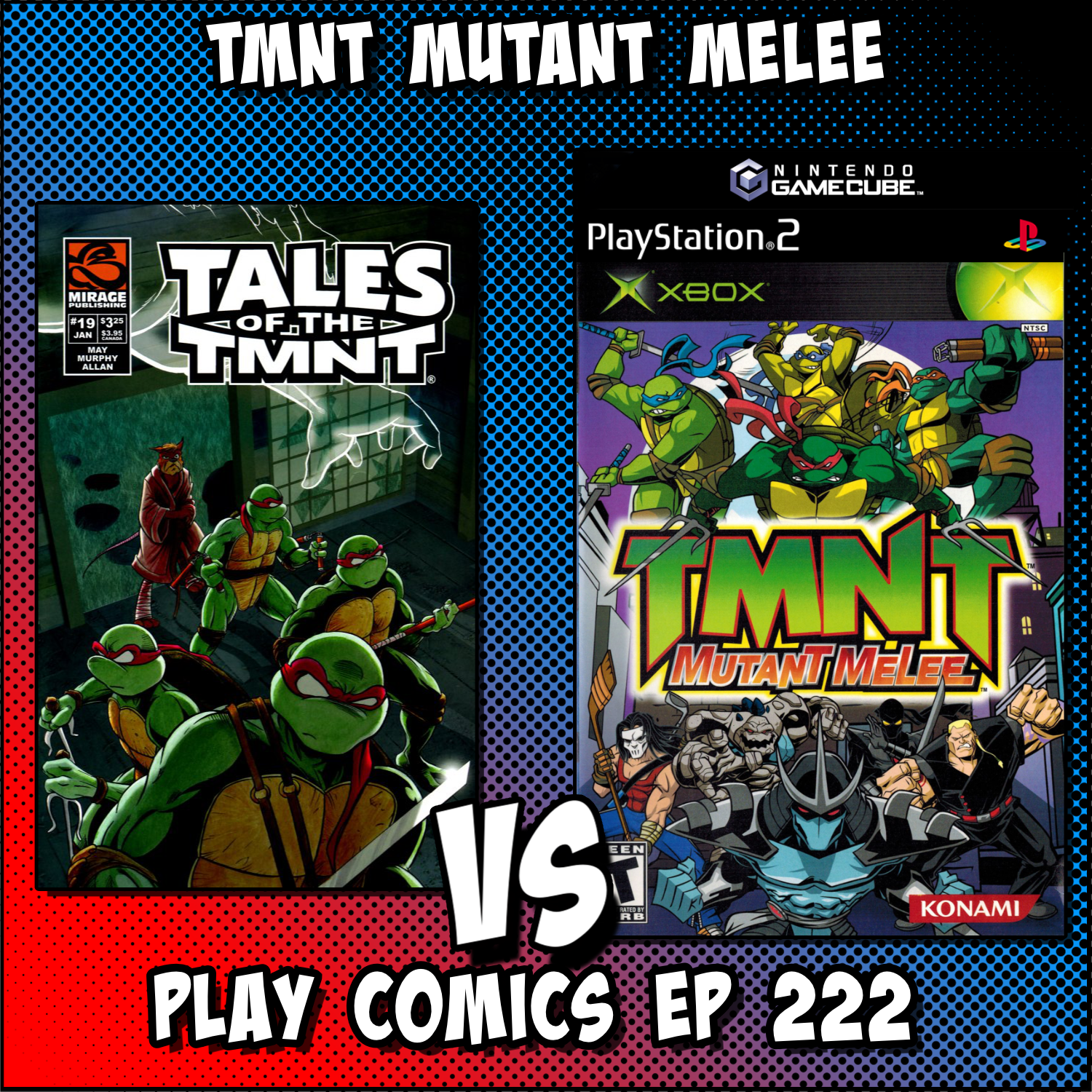


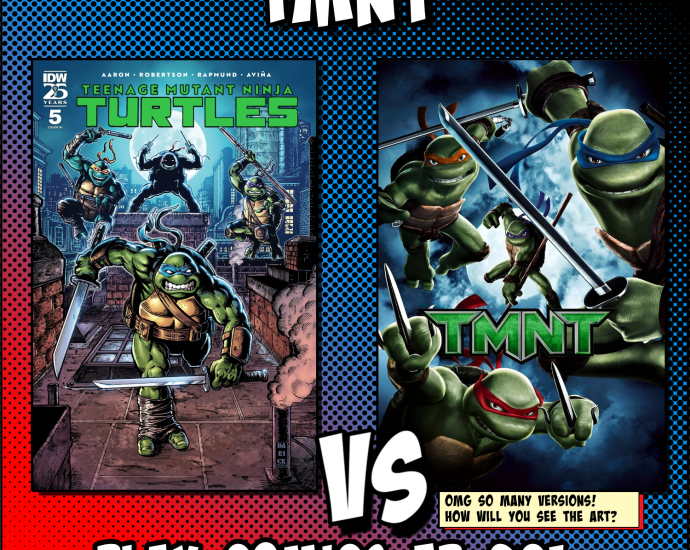
Let’s talk about the year 2007, when Ubisoft looked at Konami’s TMNT license, going up for grabs after three straight beat-em-ups, and said “yeah, we’ll take it,” the video game equivalent of adopting somebody else’s very large, very established pet. They tied the whole thing to Imagi’s brand new fully CGI turtle movie and then, in an act of scheduling chaos I can only respect, shipped the game three entire days before the film hit theaters. Bold! Confusing! Possibly the result of someone losing a calendar!

And then, because apparently one platform was never going to cut it, Ubisoft just kept going. PlayStation 2! GameCube! Xbox 360! Wii! PC! A PlayStation 3 version that got paraded around at trade shows like a prize pony and then quietly put out to pasture, never to be seen again! And just when you think the roster’s full, Nintendo DS and PSP roll in with an entirely separate game wearing the same name tag, because why make one turtle game when you could make several turtle games and let the consumer sort it out. Also, bonus points to whoever in marketing decided the title needed zero subtitles, zero colons, zero numbers, just “TMNT,” like it’s the only one that’s ever existed. Confidence!

Climbing out of the sewer to help me survey this multi-console fever dream is Jeremy Powers, host and creator of the Zenspath Entertainment Network, a man who apparently collects retro hardware, works as an engineer, and still finds time to run a podcast, which is either elite time management or a full refusal to acknowledge the concept of a day off.

So track down whichever version of this thing actually ended up in your house back in 2007, because statistically there’s a good chance it wasn’t the same one as your neighbor’s, and let’s find out if TMNT earned its spot in the turtle hall of fame, or if it should’ve stayed a trade show prototype.Continue Reading
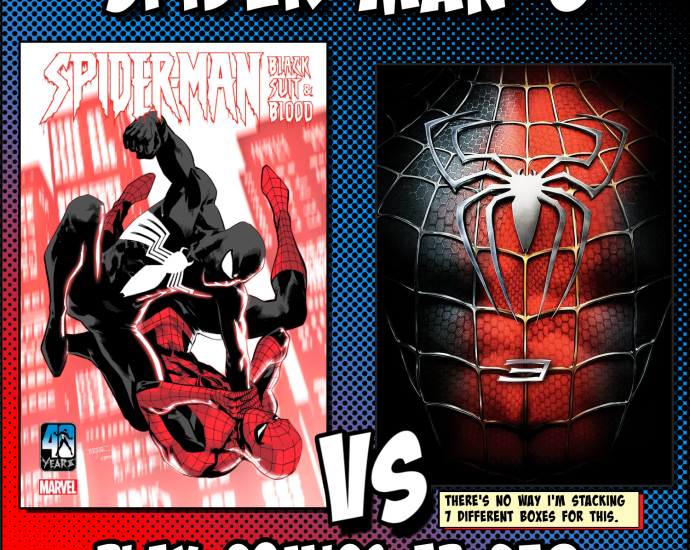
Let’s talk about Spider-Man 3, the movie where Sam Raimi looked at “menacing single antagonist” and said no thank you, I would like three, please, and also I would like Peter Parker to dance down the street like he’s auditioning for a jazz-hands cult. It’s a movie that tried to do everything, mostly succeeded at doing too much, and somehow still made enough money that Activision looked at it and thought: yes, this deserves not one video game, but two, spread across seven different consoles, so that literally nobody in 2007 could escape it. Ambitious! Chaotic! Extremely on brand for the source material!

See, there’s the fancy version, built by Treyarch for PS3, Xbox 360, and PC, where you get a whole open Manhattan to swing around in and the black suit shows up only when the story deems you emotionally ready for it, very mature, very earned. And then there’s the completely different budget cousin, built by Vicarious Visions for PS2, Wii, PSP, GBA, and DS, where you can slap the black suit on whenever you feel like being a jerk, the Wii Remote gets to pretend it’s a web-shooter, and the DS throws the D-pad in the trash entirely so you can beat up Sandman by poking a touchscreen like it owes you money. Same cover art. Same villains. Practically strangers.

Swinging in to help me sort out how many wildly different versions of one questionable movie a single franchise can generate is Harry Steele, co-host of Games on Film, the podcast where he and his brother Rory spend their days grading movies based on video games! Which means Harry has built an entire professional skillset around asking “did Hollywood mess this up,” and today, for one glorious episode, we get to point that same energy directly back at a video game and ask if it managed to mess up the movie right back. Poetic justice! Content symmetry! Whatever you want to call it, it’s happening!

So grab whichever suit you’re feeling today, pick a console, any console, apparently they all made their own decisions, and let’s find out if the Spider-Man 3 games handled three villains and seven platforms with any more finesse than the movie handled three villains and one dance number.Continue Reading

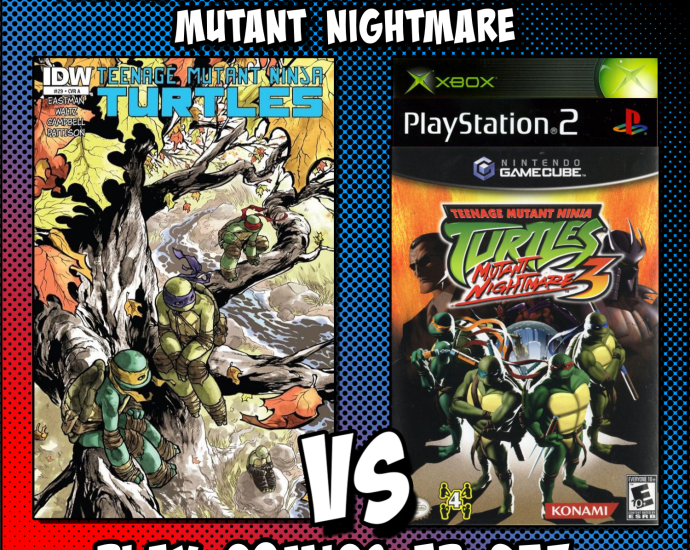
By 2005, Konami had made three TMNT beat-em-ups based on the 2003 animated series, which is the kind of commitment usually reserved for tax filings or long-term relationships. Teenage Mutant Ninja Turtles 3: Mutant Nightmare landed that November on GameCube, PS2, Xbox, and Nintendo DS as the trilogy’s closer, and Konami sent it off in style by giving it the series’ first E10+ rating, as if four years of shell-based violence had finally crossed some invisible threshold of Too Much.

The game loosely adapts the show’s third season across four “Episodes,” which means the Triceratons invade Earth, Agent Bishop kidnaps Splinter for reasons that presumably made sense to somebody in a government facility somewhere, and Shredder shows back up to remind everyone that retirement isn’t really a thing that happens to ninja warlords. Along the way you can pour experience points into skill scrolls, transform into a Dino Turtle or an Ultimate Turtle depending on the mood, and, if you clear the first Episode, unlock a modified version of the 1991 arcade classic Turtles in Time, which is Konami’s way of saying “here’s the good one, in case this one doesn’t land.”

Joining me to sort the Triceratons from the Foot Ninjas is Pierce Lydon of Spawnography, the podcast where he and George Marston work through Todd McFarlane’s entire Spawn mythology one hellish arc at a time. Pierce has already survived one trip through the Play Comics gauntlet with me on Spawn in the Demon’s Hand, so they know exactly what they signed up for this time: showing up, being extremely knowledgeable, and getting talked into yet another licensed beat-em-up nobody asked for.

So grab a ninja scroll, pick a turtle, any turtle, and let’s find out whether Mutant Nightmare sent Konami’s turtle trilogy out on a high note, or whether the Triceratons should’ve just stayed home.
Continue Reading

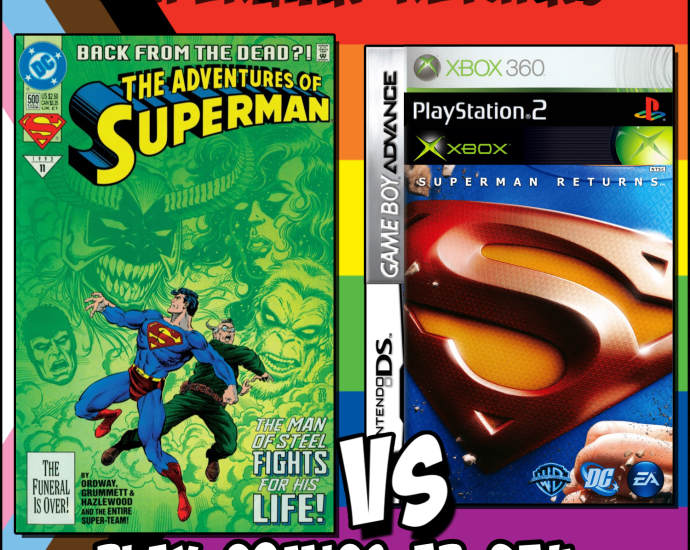
Superman Returns came out in 2006 and asked audiences a very sincere question: what if Superman, but sad? Brandon Routh brooded his way across the big screen, lifting improbable objects and pining for Lois Lane, and somewhere in a boardroom, someone decided this emotionally complex theatrical event needed to be a video game on four different platforms. Five if you count the Game Boy Advance version, which is technically a different game but we’re counting it anyway because we paid good money decided that we just needed to talk about it.

The PS2 and Xbox versions let you fly around Metropolis, absorbing explosions with your face in service of a health bar that belonged to the city rather than Superman himself, which is either a genuinely clever design idea or the most passive-aggressive mechanic in superhero gaming history. The Xbox 360 version turned the whole thing into an open-world showcase for what next-gen hardware could do, which in 2006 meant “look at those buildings.” The DS version was a side-scrolling beat-em-up. The GBA version was something else entirely. Superman Returns contained multitudes, is what we’re saying.

Joining me to dig through the whole sprawling, melancholy, city-defending mess is Adam Williamson, real-life friend, frequent Play Comics guest, and owner of a podcast idea that has been marinating for what I can only describe as a concerning length of time. Adam, I say this with love: at some point you’re going to have to actually make the thing. In the meantime, he’s here, the knowledge is flowing, and we’ve got a Superman game across half a console generation to get through.

So settle in, try not to let the city’s health bar drop to zero, and let’s find out whether Superman Returns deserved better — from Hollywood, from the games industry, and honestly, maybe from all of us.Continue Reading

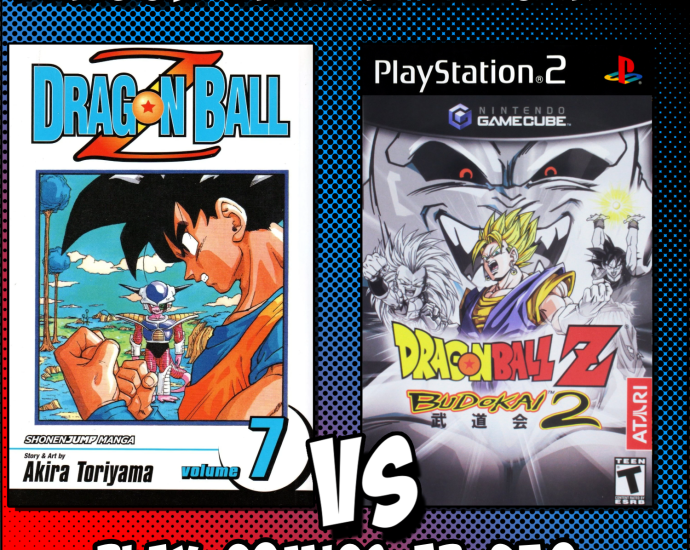
At some point in the early 2000s, someone looked at the Dragon Ball Z manga and anime, a story full of screaming men who power up for entire episodes, hair that defies physics, and villains who monologue long enough for the protagonist to reach a new power level, and said, “Yes. This. But make it a fighting game. On two, and only two, consoles.” And thus, Dragon Ball Z Budokai 2 arrived on PS2 and GameCube, ready to let you spend an unreasonable amount of time unlocking characters and pretending you know what a Fusion Dance is supposed to look like in real life.

This episode, we’re going Super Saiyan on the whole thing. The game, the manga, the anime, the drama, the capsules, the questionable story mode decisions. All of it. And joining us to power up the conversation is Russell Moran from Kaiju ComiCast, who brings exactly the kind of kaiju-sized enthusiasm this franchise demands.

So take a deep breath, squeeze out every last drop of ki you’ve got, and let’s get into it. Your hair may or may not turn gold by the end. No promises.Continue Reading

If you’ve ever wondered what would happen if professional wrestling, superhero nonsense, and a generous helping of “did they really just do that?” collided in a PS2-era video game, congratulations you’ve found your people.

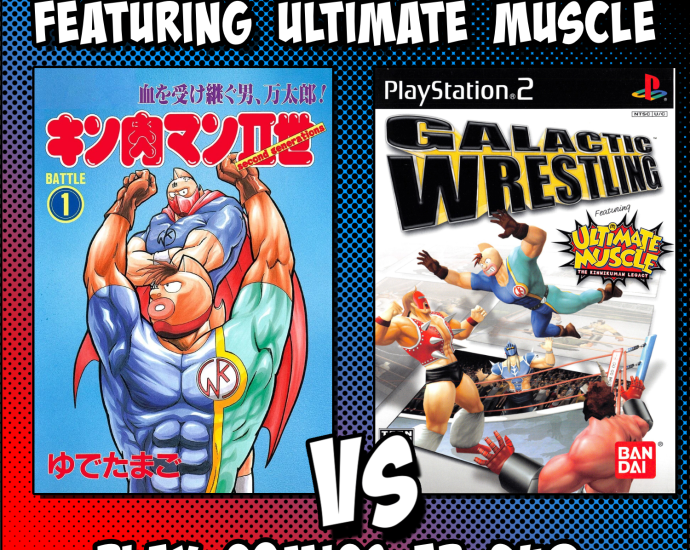
This episode dives headfirst into Galactic Wrestling Featuring Ultimate Muscle, a game that asks the important questions, like how many absurdly named wrestlers can fit into one ring and whether flexing harder is a legitimate combat strategy (it is). Along the way, we’re joined by Josh “Anoriand” Fagundes. Yes, that Anoriand from Twitch. He brings his streaming-honed wisdom and an appreciation for delightful chaos.

Between the manga roots, anime flair, and a game that absolutely commits to the bit, there’s plenty to grapple with here. So lace up your boots, oil up your… everything, and get ready for a match that’s less about winning and more about how spectacularly weird the journey can get.Continue Reading

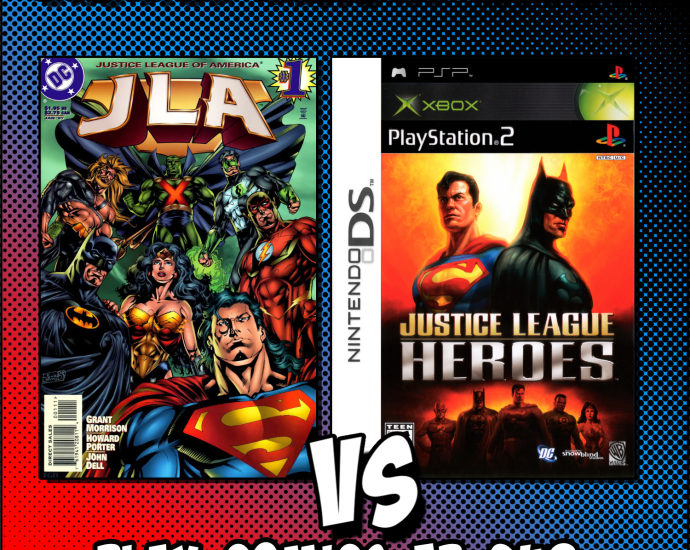
Somewhere in the mid-2000s, a group of developers looked at the Justice League and said, “What if we made a game where all your favorite heroes team up… and then we just kinda vibed with that idea instead of sticking to any specific comic storyline?” Which kind of works actually because they got Dwayne McDuffie to write it but that’s not the point. So anyway, Justice League Heroes burst onto the scene for PS2, Xbox, PSP, and Nintendo DS like a Watchtower alarm that nobody remembers installing.

This week on Play Comics, we grab our capes, charge up our vaguely canon-adjacent superpowers, and dive into a game that absolutely has Batman, Superman, and friends… ummm, friends are definitely there I promise and sometimes they have to be there because of contractual obligations. And sometimes even the best version of those friends if you’re lucky and the best version of that hero had been invented already.

Joining the adventure is Gavin Mevius from The Mixed Reviews and The Q Division, bringing along just the right blend of insight, chaos, and “wait, was that ever a comic plot?” energy to help us make sense of it all.

So get ready for teamwork, button mashing, and a Justice League game that is just kind of meh, especially considering the story that it had to work with.Continue Reading

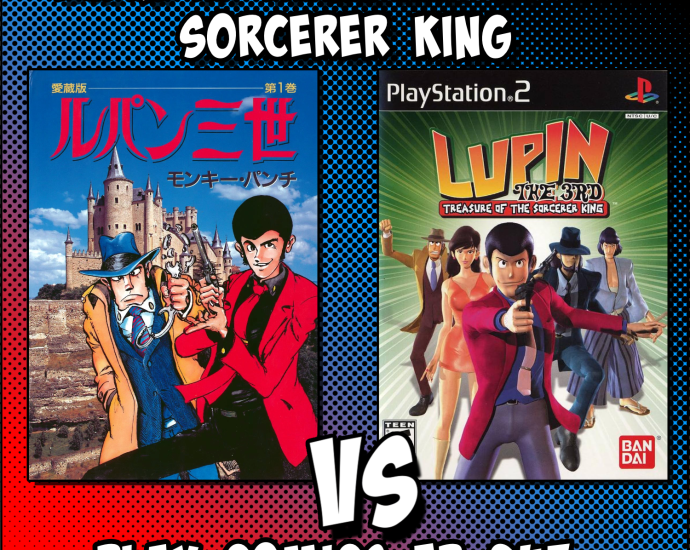
Buckle up for a PS2 heist where Lupin III swaps manga mischief for blocky stealth antics in Treasure of the Sorcerer King, that 2004 gem channeling Monkey Punch’s rogue into disguises-gone-wrong and treasure hunts that test more patience than finesse.

Joining the vault-cracking crew this time is Robbie Sherman from Conversations with Robbie Sherman, dishing on how the game stacks up to the source chaos of Jigen’s aim, Goemon’s blade ballet, and Fujiko’s inevitable backstab.

So grab your best disguise and let’s see if you can sneak the treasure out of this one. Either way it’s going to be a blast.Continue Reading

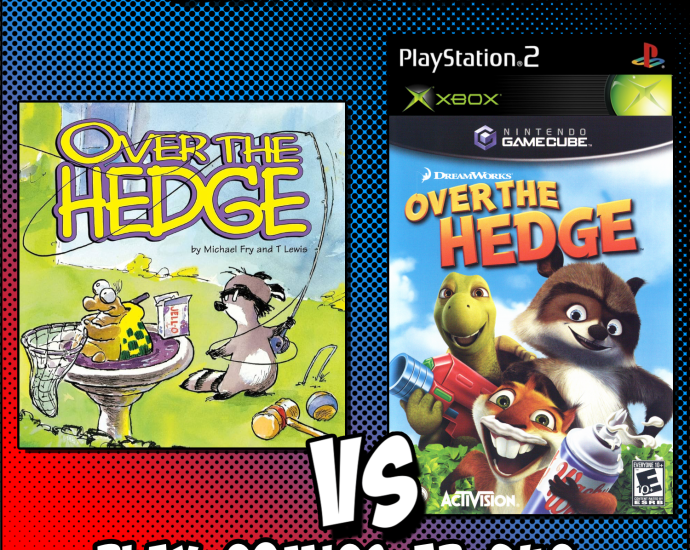
Sometimes a game says it’s based on a comic. Sometimes a movie says it’s based on a comic. And sometimes a game says it’s based on that movie that says it’s based on a comic, and suddenly we’re three layers deep in adaptation lasagna.

This week, we’re cracking open Over the Hedge for the PS2, GameCube, and Xbox—a game that definitely follows the movie’s lead and only politely waves at the original comic strip from across the yard. Expect sneaking, snacking, and more suburban chaos than your average HOA meeting can handle.

Joining the show is Doug Fink (Walloping Web Snappers, Falling with Style, Novel Gaming, and Skreeonk) to help sort out what happens when animals, energy drinks, and licensed games collide in one very busy backyard.

Grab your energy drinks and questionable life choices. I hope you don’t get pinched by the exterminator.Continue Reading

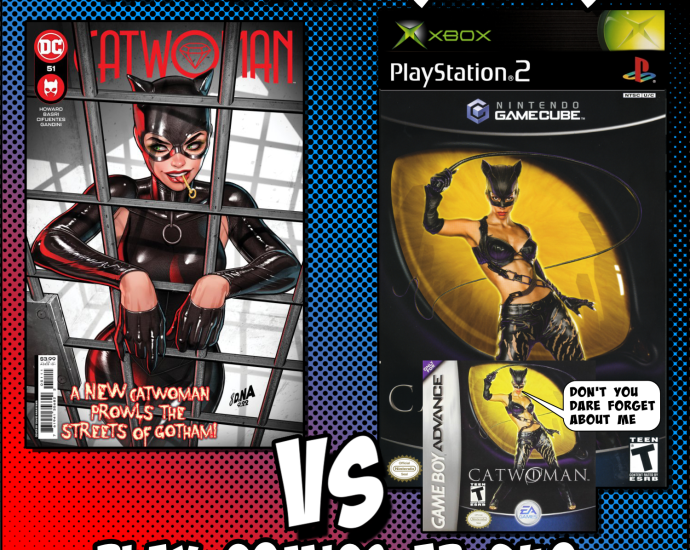
This time on Play Comics, we’re sneaking into the glittery, CGI-filled vault of early-2000s tie-in games and asking the question nobody demanded an answer to: “What if Catwoman, but make it even more 2004?” Between the leather, the eyeliner, and the wall-running, we’re checking out the Catwoman movie game that clawed its way onto GameCube, Xbox, PS2, and Game Boy Advance. It’s the kind of experience that feels like someone motion-captured an energy drink and then gave it a whip.

To help make sense of this pixelated fever dream, Chris is joined by frequent guest Billy from his real life friend group, because if you’re going to suffer through mid-2000s licensed game nonsense, you should at least do it with someone who can confirm you’re not hallucinating. Together they dive into the bizarre elegance of magically convenient scaffolding, combat that thinks “pressing one button a lot” is a personality trait, and a story that remembers it’s based on a movie just often enough to be legally distinct from fun. Expect more cat puns per minute than the ESRB ever intended.

So dust off your flip phone, crank up your nu-metal playlist, and prepare to swing through a world where glass windows are just suggestions and gravity is more of a guideline. Is this game an underrated gem, a misunderstood experiment, or the digital equivalent of stepping on a LEGO in high heels? Tune in to find out how this cinematic catastrophe translated to four different systems, and whether any of them managed to land on their feet.Continue Reading

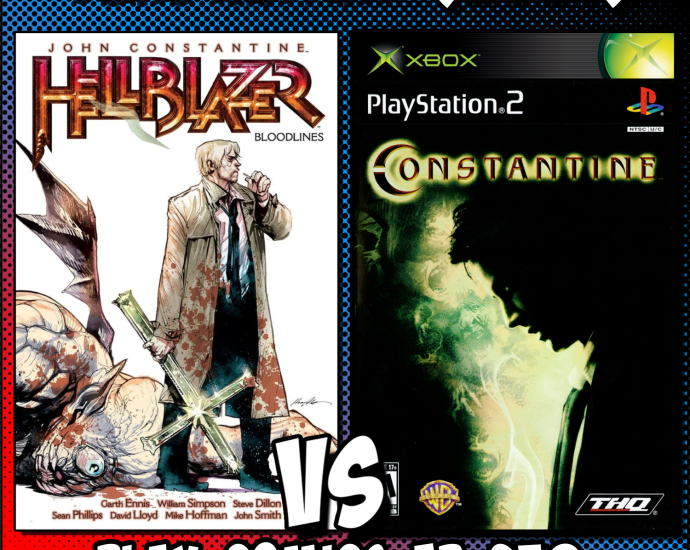
Some licensed games take you to fantastical worlds filled with wonder and adventure. This is not one of those games. This time on Play Comics we’re trudging through the smoke-filled, demon-splattered streets of Constantine (2005), the tie-in that asked, “What if we took Keanu Reeves, a theological horror film, and the PS2’s most dramatic lighting engine, and just… saw what happened?” Somehow it’s a third-person action game, a movie adaptation, and a vaguely spiritual experience about regretting your rental choices all at the same time.

Chris isn’t wandering this half-lit hellscape alone though. Merrilee O’Neil from Fear Coded jumps into the exorcism circle to help figure out where this game lands on the spectrum from “surprisingly solid” to “should’ve stayed in development hell.” Together they’re digging into how much of the comic DNA and film mood actually survived the trip through Bits Studios and THQ, and how often it just turns into early-2000s “shoot the demon, ask theology questions later” energy.

So grab your PS2 or Xbox controller, light a metaphorical cigarette (or maybe don’t, your lungs will thank you), and step into a world where holy relics share inventory space with questionable game design choices. Expect demons, exorcisms, and more snark than you can fit into one trench coat as Chris and Merrilee poke at what works, what doesn’t, and why this particular slice of licensed weirdness still lingers like the smell of burnt incense in a game store bargain binContinue Reading

Set sail, button-mashers, because this time Play Comics is diving face-first into One Piece: Grand Battle! that PS2 and GameCube special where early Water 7-era drama gets smooshed into a chaos-filled arena and told to play nice. Expect stretchy punches, loud special attacks, and exactly the kind of character balance you’d expect from a game that assumes “pirate” and “fair” don’t belong in the same sentence. We’re talking Straw Hats, shipyards, and the eternal question: “Is this actually good, or do I just really like yelling ‘Gum-Gum’ every five seconds?”

Joining Chris on this voyage is Janine Juliette from D’ohmance Dawn, here to bring big-brain One Piece insight and just the right amount of gremlin energy to keep things interesting. Janine’s got thoughts on how this slice of the anime translates into a brawler, where the game nails the Straw Hats’ personalities, and where it feels like someone skimmed the wiki five minutes before coding a super move. If you’ve ever wondered what happens when a deeply thoughtful One Piece fan is forced to reckon with PS2-era anime jank, this is absolutely your kind of chaos.

So grab your controller, your favorite questionable snack, and maybe a backup controller for when Luffy’s rubber nonsense finally pushes you over the edge. We’re digging into how far the game actually gets into the story, why some characters feel terrifying and others feel like they snuck in as a joke, and whether this one belongs on your “must-play” shelf or your “fondly mock from a distance” list. Treasure, friendship, and highly unsafe maritime workplace practices await. Let’s see if Grand Battle! can keep its ship together.Continue Reading

This week on play comics we ask ourselves what happens if you you can’t decide what you want to make a game about. Should you just give up? Should you really dig into your soul and decide what you’re super passionate about? Should you look and see if there’s any other related media coming out that you can tie this game into? Or should you act like you’re at the end of five different boxes of sugary cereal and justice dump the mall into a single bowl and see what happens?

There’s certainly one thing that I made my mind up about this one, and that’s how Perry Constantine from Superhero Cinephiles and Japan on Film needed to come by and help me make sure that I kept everything straight here. And it’s a good thing too because with more playable character than I want to count spread out across 7 consoles upon release and a few more as back catalogs were taken advantage of it would have been really easy to miss something here.

So was there an actual story for this game? Or was it just a giant excuse to squeeze in as many tidbits as they could so the other kids would think they’re cool? You’ll have to listen to find out!Continue Reading

Strap in for the mecha of your dreams, or nightmares, because this week on Play Comics we’re transforming, exploding, and fighting our way through the post-apocalyptic wastelands of Robotech: Invasion, the PS2 and Xbox shooter that said, “You know what would make the Invid Invasion better? A first-person perspective and the ability to pilot a motorcycle that also becomes battle armor!” (Spoiler alert: it actually kinda worked!)

This gloriously ambitious action game takes the New Generation saga of Robotech and asks the most important question: what if we gave players the chance to save Earth from alien protoplasmic parasites while somehow managing to keep their sense of humor intact? Featuring FPS combat, transforming Cyclone vehicles, and enough environmental destruction to make any resistance fighter proud, this 2004 adventure proves that sometimes the best way to fight an alien invasion is to embrace the chaos and enjoy the ride.

Joining us on this mecha-piloting expedition is the phenomenally talented Greg Sewart from the Player One Podcast, a man who’s been dissecting video games with the precision of a Robotech technician since before most of us even knew what a Veritech was. When Greg isn’t co-hosting one of gaming’s longest-running podcast institutions with fellow ex-games journalists, he’s crafting the delightfully nerdy web series Generation 16 where he breaks down the games that shaped an entire generation with the kind of passion that can only come from actually living through these gaming eras. And here’s the kicker, Greg has intimate knowledge of Robotech: Invasion that’ll make this episode more insightful than your average “let’s talk about this old game” discussion. Here’s a hint, he helped make it.

Together, we’ll explore how this game managed to capture the desperate, war-torn atmosphere of Earth under Invid occupation, puzzle through the quirky design choices (inverted camera controls, anyone?), and debate whether transforming on the fly between Cyclone and battle armor is the best or most ridiculous gameplay mechanic ever conceived. Did this game successfully honor the Robotech universe, or did it get a little too ambitious for its own good? How does it stack up against the PS2’s library of anime-inspired action games? And most importantly is the level design actually good, or are we just nostalgia-blinded?

Lock and load your favorite energy weapon, adjust those camera settings immediately, and prepare yourself for an episode packed with more robotic transformation sequences than an afternoon spent watching the New Generation arc!Continue Reading

Attention, ace pilots and Peanuts enthusiasts! Buckle up your aviator goggles and prepare for some canine combat as Play Comics takes a nostalgic dive into Snoopy vs. The Red Baron, the PS2 and PSP action extravaganza where Charles M. Schulz’s beloved dog finally got his chance to translate his doghouse fever dreams into actual gameplay. That’s right, somewhere out there a development team sat down and thought “You know what the world needs? Snoopy piloting an actual Sopwith Camel and engaging in legitimate aerial dogfights with the Red Baron, the nemesis who has haunted a beagle’s imagination since comic strips were still printed on actual paper.”

This episode is guaranteed to be more unpredictable than Snoopy’s victory dance moves and absolutely loaded with more nostalgia than Lucy’s psychiatric booth could ever handle. Joining us for this World War I aviation adventure is the incomparable Phil Theobald from the Player One Podcast, a man who knows retro gaming inside and out and whose encyclopedic knowledge of everything from the Peanuts universe to PS2-era gameplay mechanics makes him the perfect co-pilot for this particular mission. Together, we’ll soar through the skies, investigate how faithfully this game captured Snoopy’s long-running fantasy sequences, and determine whether this particular adaptation is more “Happy Dance” and less “Charlie Brown Disappointment.”

Will you discover that this game is a hidden gem that deserved more recognition, or will you find yourself grounded faster than a teenager who borrowed the car keys without permission? There’s only one way to find out!Continue Reading

Listen up, mutation enthusiasts and multi-platform adventurers, because this week on Play Comics we’re strapping on our Kevlar suits and diving straight into the bewildering, beast-infested, cross-console chaos of X-Men: The Official Game! We’re talking about the 2006 game that launched on practically every system known to mankind (GBA, GameCube, Nintendo DS, PS2, Xbox, and Xbox 360. Seriously, did they forget a platform?), which based the story nominally on the third X-Men film from Fox. You know, the one that showed us what happens when Professor Xavier and Magneto finally decided to outsource their beef settlement to a video game developer.

This particular romp through Marvel’s merry mutant universe was brought to you by the folks who looked at a film featuring Wolverine, Nightcrawler, and Iceman and thought, “What if we made this game SLIGHTLY different on each platform?” It’s like they were challenged to see just how elastic the definition of ‘the same game’ could be, and frankly, the results are beautifully inconsistent. The story was co-written by Chris Claremont (yes, THAT Chris Claremont) and Zak Penn, and it featured voice acting from the actual film cast, which means you got Hugh Jackman’s growl in your living room, your handheld, and probably also your neighbors’ living rooms at 2 AM.

Joining us to make sense of this portable and stationary pandemonium is none other than Alex Zalben from Comic Book Club, a weekly live talk show about comics that’s been running since 2006, performed at every major comic convention you can think of, written up in the New York Times more than once, and hosted literally hundreds of guests with more swagger than most podcasts muster in a lifetime. Alex is a writer, editor, and podcaster who knows his way around both four-color storytelling and video game adaptations, making him the perfect guide to help us determine whether this cross-generational, cross-console adventure managed to capture what makes the X-Men actually work, or if it just made us wish we could teleport away from our screens.

So sync up your Danger Room protocols, pick your favorite handheld or home console, and get ready for an episode that’s guaranteed to be more chaotic than a Sentinel factory explosion and infinitely more confusing than trying to figure out why THIS game exists on THAT console!Continue Reading

Attention, galaxy defenders and neuralyzer-dodging citizens! This week on Play Comics, we’re suiting up to tackle Men in Black II: Alien Escape, a title that hit the PS2 and GameCube with all the grace of a cockroach climbing out of a dumpster. We are looking at a game that saw the plot of the second movie, shrugged, and decided that what the franchise really needed was a run-and-gun shooter where Agent K looks less like a grizzled veteran and more like an Elvis impersonator midway through a bad Vegas residency.

Joining us to figure out why the Class 7 Ozone Demogrifier sounds like a vacuum cleaner you’d buy from a 3 AM infomercial is the omnipresent Doug Fink. You know him, you love him, and you can hear him on Walloping Websnappers, Novel Gaming, Falling with Style, and Skreeonk, all of which are on the Glitterjaw Podcast Collective. Together, we’re diving deep into a game that proves you don’t actually need the likeness rights to your main characters to ship a product, provided you have enough aliens to splatter across a corridor that looks exactly like the last five corridors you just ran through.

So put on your Ray-Bans, check your memories at the door, and prepare for an episode that makes about as much sense as putting a Ballchinian in a post office.Continue Reading

Grab your custom jutsu hand seals and prepare to feel a crushing sense of inadequacy when comparing your reaction time to a ninja’s because we’re diving shadow clone deep into the first Naruto Ultimate Ninja game on PlayStation 2! This week we’re channeling our inner shinobi to explore how Bandai Namco took Masashi Kishimoto’s legendary manga about a determined orange-suited underdog and transformed it into a frantic button-mashing tournament fighter that somehow convinced an entire generation of fans that they could recreate iconic Naruto moments if they just hit the attack button fast enough and screamed at their TV harder than Naruto himself.

Released during the golden age of anime-to-console adaptations, the Naruto Ultimate Ninja games became the de facto way fans could live out their ninja fantasies—assuming your ninja fantasy involves janky camera angles, occasionally unresponsive inputs, and the kind of special effect visual soup that makes you wonder if you’re actually watching a jutsu or if your PS2 is just having a mild aneurysm. With fighters pulled straight from the Hidden Leaf Village and beyond, these games proved that sometimes the best way to honor a beloved manga is to give players the chance to make Naruto fight characters he had absolutely no reason to fight (looking at you, random filler villains).

This episode, we’re absolutely stoked to welcome Cory Byrd from Byrds Eye View Comics—a fellow enthusiast of all things sequential art and gaming who can probably explain why Naruto’s popularity transcended manga, anime, AND video games with the kind of clarity that makes marketing departments weep with envy. Together, we’ll investigate whether these games managed to capture the heart, humor, and hyperkinetic energy of Kishimoto’s creation, or if they just left us face-first in the dirt like Naruto at the beginning of the series.

So synchronize your chakra, practice your most devastating combo, and prepare for an episode that’s guaranteed to be more chaotic than a Sand Village invasion and infinitely more entertaining than watching filler arcs about onigiri eating contests.Continue Reading

Lock your squad into formation, charge your bolters, and prepare your genetically-enhanced blue skin for a parade of panzer-busting action because this week on Play Comics we’re putting boots to dirt in the grim, industrial wastelands of Rogue Trooper, the 2005 third-person shooter that took Gerry Finley-Day and Dave Gibbons’s iconic tale of a genetically engineered super-soldier and transformed it into a cover-based combat experience that somehow managed to capture the grit, the fury, and the desperate isolation of being a lone warrior against overwhelming odds. Originally deployed across PS2, Xbox, and Wii, Rogue’s had more platform changes than a soldier has armor repairs, eventually landing a remaster invasion on PS4, Xbox One, and Nintendo Switch, proving that some grimdark British sci-fi concepts just refuse to stay buried in the trenches.

Speaking of refusing to stay down, we’re genuinely thrilled to have Steve Morris from Shelfdust joining us for this deep dive. When he’s not busy operating as the marketing manager for 2000 AD itself, essentially being the guy who decides which corner of Judge Dredd’s dystopia gets the spotlight treatment, he’s the critical voice behind one of comics fandom’s most thoughtful, hilarious, and incisive podcast ecosystems. Steve brings both the insider knowledge of how 2000 AD operates AND the fan’s perspective that makes him the perfect guide through this particular adaptation’s journey from glossy magazine pages to console warfare.

Together, we’ll investigate whether this hyper-violent squad-based adventure managed to capture what makes Rogue Trooper such an enduring character, a soldier stripped of everything but his wits, his weapons, and three AI companions implanted directly into his equipment. Does the game understand the existential dread of being created solely as a weapon? Can it convey the isolation that defines the character while also providing the kind of multiplayer mayhem that defines the era? And perhaps most importantly: does this game explain why blue skin became the ultimate badge of being expendable in the far future?

Grab your tactical visor, synchronize your biometric links, and prepare for an episode that’s more explosive than a Rogue Trooper ambush and considerably more thoughtful than you’d expect from a game about murdering aliens on a lifeless planet.Continue Reading

Dust off your cowabunga collection and prepare your fists for some serious turtle-powered mayhem, because this week on Play Comics we’re diving shell-first into TMNT: Mutant Melee, the 2005 arena-based fighting bonanza that took the 2003 animated series and asked the most important question: what if we just got all the turtles, their friends, AND their enemies into one room and let them beat the absolute snot out of each other? Developed by Konami for PS2, Xbox, GameCube, and PC, this isn’t your typical one-on-one fighter—it’s more like if Smash Bros and Power Stone had a shell-covered baby and that baby knew all of Splinter’s teachings.

Joining us for this body-slamming brawl is the incomparable Tommy Proffitt from Distant Echoes and Lee Carvallo’s Podding Challenge, a podcast wizard who understands the intricate art of dissecting character-based chaos and canon coherence like few others can. Plus being able to bring his signature blend of gaming nostalgia and comedic precision to help us determine if this colorful chaos simulator managed to capture the spirit of its source material or if it swung its nunchucks at empty air.

Together, we’ll navigate the treacherous waters of Last Man Standing mode, contemplate why anyone thought having 22 playable characters was a good idea, and investigate whether the game’s holiday-themed cosmetics (seriously—set the date to December 25th and watch the turtles rock Santa hats) are feature or bug.Continue Reading