

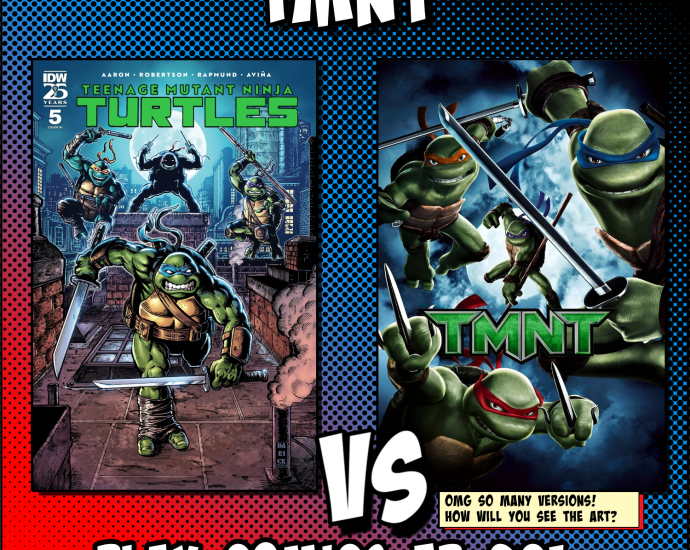
Let’s talk about the year 2007, when Ubisoft looked at Konami’s TMNT license, going up for grabs after three straight beat-em-ups, and said “yeah, we’ll take it,” the video game equivalent of adopting somebody else’s very large, very established pet. They tied the whole thing to Imagi’s brand new fully CGI turtle movie and then, in an act of scheduling chaos I can only respect, shipped the game three entire days before the film hit theaters. Bold! Confusing! Possibly the result of someone losing a calendar!

And then, because apparently one platform was never going to cut it, Ubisoft just kept going. PlayStation 2! GameCube! Xbox 360! Wii! PC! A PlayStation 3 version that got paraded around at trade shows like a prize pony and then quietly put out to pasture, never to be seen again! And just when you think the roster’s full, Nintendo DS and PSP roll in with an entirely separate game wearing the same name tag, because why make one turtle game when you could make several turtle games and let the consumer sort it out. Also, bonus points to whoever in marketing decided the title needed zero subtitles, zero colons, zero numbers, just “TMNT,” like it’s the only one that’s ever existed. Confidence!

Climbing out of the sewer to help me survey this multi-console fever dream is Jeremy Powers, host and creator of the Zenspath Entertainment Network, a man who apparently collects retro hardware, works as an engineer, and still finds time to run a podcast, which is either elite time management or a full refusal to acknowledge the concept of a day off.

So track down whichever version of this thing actually ended up in your house back in 2007, because statistically there’s a good chance it wasn’t the same one as your neighbor’s, and let’s find out if TMNT earned its spot in the turtle hall of fame, or if it should’ve stayed a trade show prototype.Continue Reading
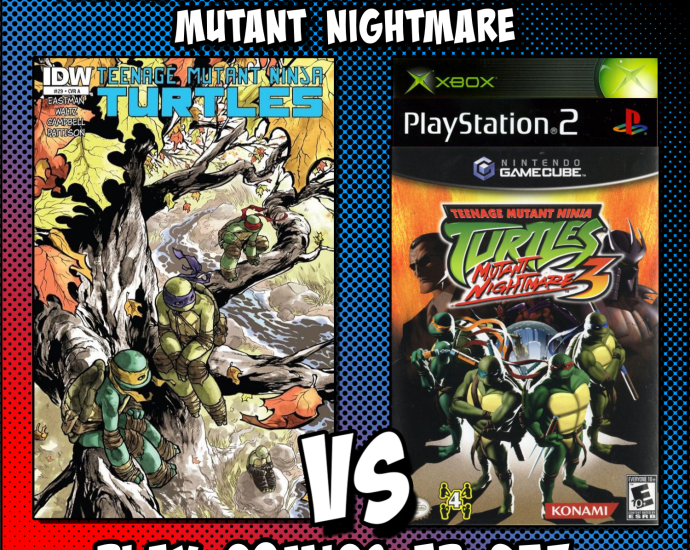
By 2005, Konami had made three TMNT beat-em-ups based on the 2003 animated series, which is the kind of commitment usually reserved for tax filings or long-term relationships. Teenage Mutant Ninja Turtles 3: Mutant Nightmare landed that November on GameCube, PS2, Xbox, and Nintendo DS as the trilogy’s closer, and Konami sent it off in style by giving it the series’ first E10+ rating, as if four years of shell-based violence had finally crossed some invisible threshold of Too Much.

The game loosely adapts the show’s third season across four “Episodes,” which means the Triceratons invade Earth, Agent Bishop kidnaps Splinter for reasons that presumably made sense to somebody in a government facility somewhere, and Shredder shows back up to remind everyone that retirement isn’t really a thing that happens to ninja warlords. Along the way you can pour experience points into skill scrolls, transform into a Dino Turtle or an Ultimate Turtle depending on the mood, and, if you clear the first Episode, unlock a modified version of the 1991 arcade classic Turtles in Time, which is Konami’s way of saying “here’s the good one, in case this one doesn’t land.”

Joining me to sort the Triceratons from the Foot Ninjas is Pierce Lydon of Spawnography, the podcast where he and George Marston work through Todd McFarlane’s entire Spawn mythology one hellish arc at a time. Pierce has already survived one trip through the Play Comics gauntlet with me on Spawn in the Demon’s Hand, so they know exactly what they signed up for this time: showing up, being extremely knowledgeable, and getting talked into yet another licensed beat-em-up nobody asked for.

So grab a ninja scroll, pick a turtle, any turtle, and let’s find out whether Mutant Nightmare sent Konami’s turtle trilogy out on a high note, or whether the Triceratons should’ve just stayed home.
Continue Reading

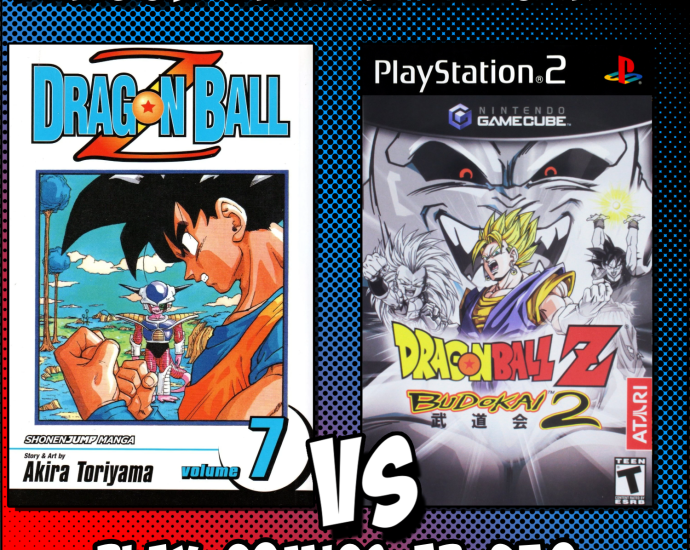
At some point in the early 2000s, someone looked at the Dragon Ball Z manga and anime, a story full of screaming men who power up for entire episodes, hair that defies physics, and villains who monologue long enough for the protagonist to reach a new power level, and said, “Yes. This. But make it a fighting game. On two, and only two, consoles.” And thus, Dragon Ball Z Budokai 2 arrived on PS2 and GameCube, ready to let you spend an unreasonable amount of time unlocking characters and pretending you know what a Fusion Dance is supposed to look like in real life.

This episode, we’re going Super Saiyan on the whole thing. The game, the manga, the anime, the drama, the capsules, the questionable story mode decisions. All of it. And joining us to power up the conversation is Russell Moran from Kaiju ComiCast, who brings exactly the kind of kaiju-sized enthusiasm this franchise demands.

So take a deep breath, squeeze out every last drop of ki you’ve got, and let’s get into it. Your hair may or may not turn gold by the end. No promises.Continue Reading

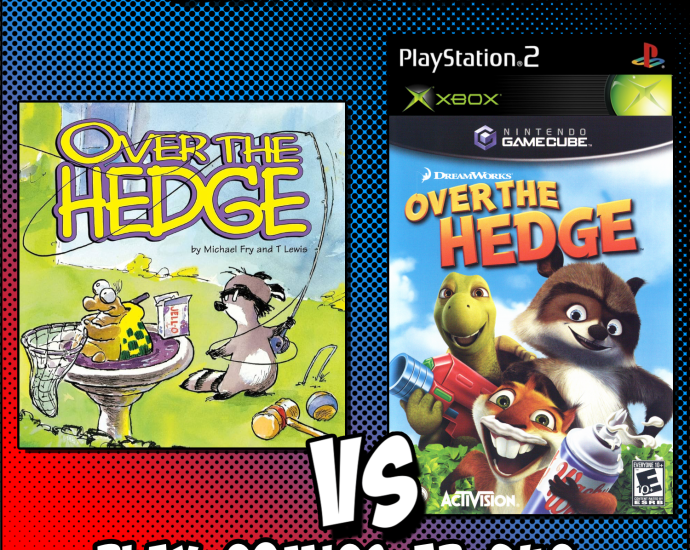
Sometimes a game says it’s based on a comic. Sometimes a movie says it’s based on a comic. And sometimes a game says it’s based on that movie that says it’s based on a comic, and suddenly we’re three layers deep in adaptation lasagna.

This week, we’re cracking open Over the Hedge for the PS2, GameCube, and Xbox—a game that definitely follows the movie’s lead and only politely waves at the original comic strip from across the yard. Expect sneaking, snacking, and more suburban chaos than your average HOA meeting can handle.

Joining the show is Doug Fink (Walloping Web Snappers, Falling with Style, Novel Gaming, and Skreeonk) to help sort out what happens when animals, energy drinks, and licensed games collide in one very busy backyard.

Grab your energy drinks and questionable life choices. I hope you don’t get pinched by the exterminator.Continue Reading

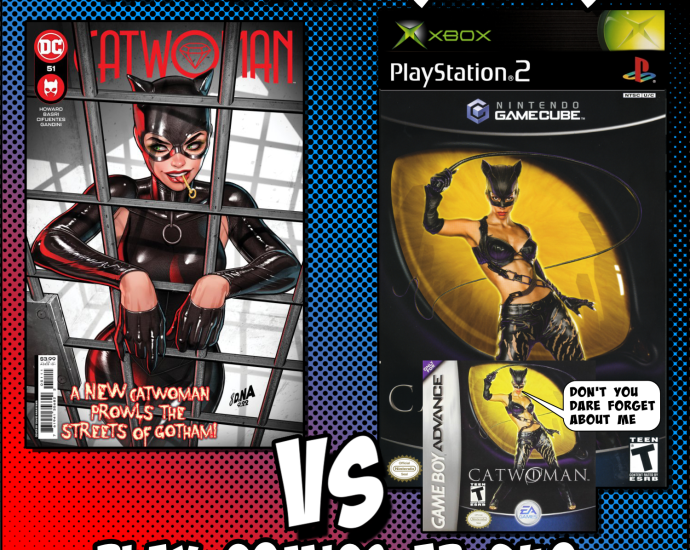
This time on Play Comics, we’re sneaking into the glittery, CGI-filled vault of early-2000s tie-in games and asking the question nobody demanded an answer to: “What if Catwoman, but make it even more 2004?” Between the leather, the eyeliner, and the wall-running, we’re checking out the Catwoman movie game that clawed its way onto GameCube, Xbox, PS2, and Game Boy Advance. It’s the kind of experience that feels like someone motion-captured an energy drink and then gave it a whip.

To help make sense of this pixelated fever dream, Chris is joined by frequent guest Billy from his real life friend group, because if you’re going to suffer through mid-2000s licensed game nonsense, you should at least do it with someone who can confirm you’re not hallucinating. Together they dive into the bizarre elegance of magically convenient scaffolding, combat that thinks “pressing one button a lot” is a personality trait, and a story that remembers it’s based on a movie just often enough to be legally distinct from fun. Expect more cat puns per minute than the ESRB ever intended.

So dust off your flip phone, crank up your nu-metal playlist, and prepare to swing through a world where glass windows are just suggestions and gravity is more of a guideline. Is this game an underrated gem, a misunderstood experiment, or the digital equivalent of stepping on a LEGO in high heels? Tune in to find out how this cinematic catastrophe translated to four different systems, and whether any of them managed to land on their feet.Continue Reading

Set sail, button-mashers, because this time Play Comics is diving face-first into One Piece: Grand Battle! that PS2 and GameCube special where early Water 7-era drama gets smooshed into a chaos-filled arena and told to play nice. Expect stretchy punches, loud special attacks, and exactly the kind of character balance you’d expect from a game that assumes “pirate” and “fair” don’t belong in the same sentence. We’re talking Straw Hats, shipyards, and the eternal question: “Is this actually good, or do I just really like yelling ‘Gum-Gum’ every five seconds?”

Joining Chris on this voyage is Janine Juliette from D’ohmance Dawn, here to bring big-brain One Piece insight and just the right amount of gremlin energy to keep things interesting. Janine’s got thoughts on how this slice of the anime translates into a brawler, where the game nails the Straw Hats’ personalities, and where it feels like someone skimmed the wiki five minutes before coding a super move. If you’ve ever wondered what happens when a deeply thoughtful One Piece fan is forced to reckon with PS2-era anime jank, this is absolutely your kind of chaos.

So grab your controller, your favorite questionable snack, and maybe a backup controller for when Luffy’s rubber nonsense finally pushes you over the edge. We’re digging into how far the game actually gets into the story, why some characters feel terrifying and others feel like they snuck in as a joke, and whether this one belongs on your “must-play” shelf or your “fondly mock from a distance” list. Treasure, friendship, and highly unsafe maritime workplace practices await. Let’s see if Grand Battle! can keep its ship together.Continue Reading

Listen up, mutation enthusiasts and multi-platform adventurers, because this week on Play Comics we’re strapping on our Kevlar suits and diving straight into the bewildering, beast-infested, cross-console chaos of X-Men: The Official Game! We’re talking about the 2006 game that launched on practically every system known to mankind (GBA, GameCube, Nintendo DS, PS2, Xbox, and Xbox 360. Seriously, did they forget a platform?), which based the story nominally on the third X-Men film from Fox. You know, the one that showed us what happens when Professor Xavier and Magneto finally decided to outsource their beef settlement to a video game developer.

This particular romp through Marvel’s merry mutant universe was brought to you by the folks who looked at a film featuring Wolverine, Nightcrawler, and Iceman and thought, “What if we made this game SLIGHTLY different on each platform?” It’s like they were challenged to see just how elastic the definition of ‘the same game’ could be, and frankly, the results are beautifully inconsistent. The story was co-written by Chris Claremont (yes, THAT Chris Claremont) and Zak Penn, and it featured voice acting from the actual film cast, which means you got Hugh Jackman’s growl in your living room, your handheld, and probably also your neighbors’ living rooms at 2 AM.

Joining us to make sense of this portable and stationary pandemonium is none other than Alex Zalben from Comic Book Club, a weekly live talk show about comics that’s been running since 2006, performed at every major comic convention you can think of, written up in the New York Times more than once, and hosted literally hundreds of guests with more swagger than most podcasts muster in a lifetime. Alex is a writer, editor, and podcaster who knows his way around both four-color storytelling and video game adaptations, making him the perfect guide to help us determine whether this cross-generational, cross-console adventure managed to capture what makes the X-Men actually work, or if it just made us wish we could teleport away from our screens.

So sync up your Danger Room protocols, pick your favorite handheld or home console, and get ready for an episode that’s guaranteed to be more chaotic than a Sentinel factory explosion and infinitely more confusing than trying to figure out why THIS game exists on THAT console!Continue Reading

Attention, galaxy defenders and neuralyzer-dodging citizens! This week on Play Comics, we’re suiting up to tackle Men in Black II: Alien Escape, a title that hit the PS2 and GameCube with all the grace of a cockroach climbing out of a dumpster. We are looking at a game that saw the plot of the second movie, shrugged, and decided that what the franchise really needed was a run-and-gun shooter where Agent K looks less like a grizzled veteran and more like an Elvis impersonator midway through a bad Vegas residency.

Joining us to figure out why the Class 7 Ozone Demogrifier sounds like a vacuum cleaner you’d buy from a 3 AM infomercial is the omnipresent Doug Fink. You know him, you love him, and you can hear him on Walloping Websnappers, Novel Gaming, Falling with Style, and Skreeonk, all of which are on the Glitterjaw Podcast Collective. Together, we’re diving deep into a game that proves you don’t actually need the likeness rights to your main characters to ship a product, provided you have enough aliens to splatter across a corridor that looks exactly like the last five corridors you just ran through.

So put on your Ray-Bans, check your memories at the door, and prepare for an episode that makes about as much sense as putting a Ballchinian in a post office.Continue Reading

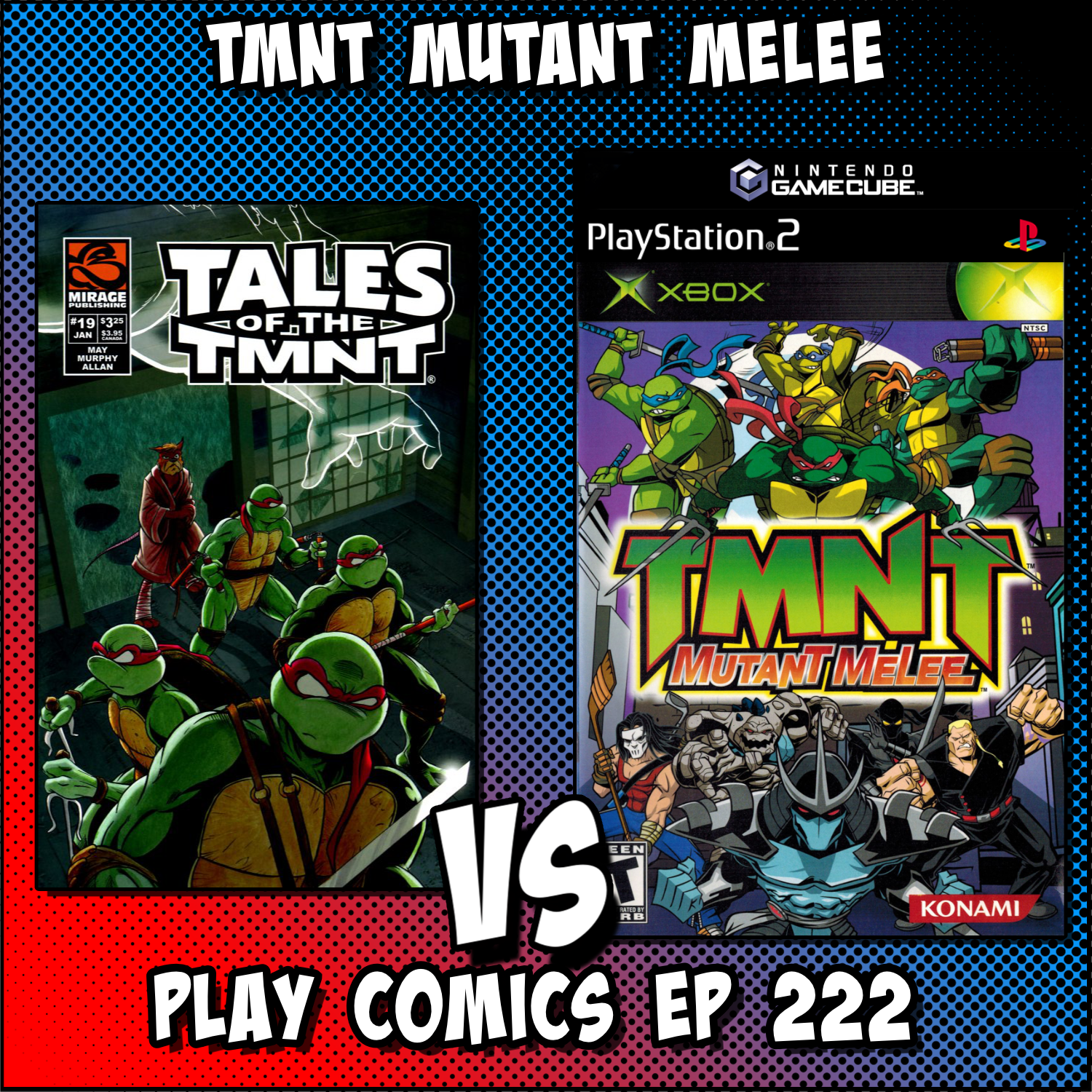
Dust off your cowabunga collection and prepare your fists for some serious turtle-powered mayhem, because this week on Play Comics we’re diving shell-first into TMNT: Mutant Melee, the 2005 arena-based fighting bonanza that took the 2003 animated series and asked the most important question: what if we just got all the turtles, their friends, AND their enemies into one room and let them beat the absolute snot out of each other? Developed by Konami for PS2, Xbox, GameCube, and PC, this isn’t your typical one-on-one fighter—it’s more like if Smash Bros and Power Stone had a shell-covered baby and that baby knew all of Splinter’s teachings.

Joining us for this body-slamming brawl is the incomparable Tommy Proffitt from Distant Echoes and Lee Carvallo’s Podding Challenge, a podcast wizard who understands the intricate art of dissecting character-based chaos and canon coherence like few others can. Plus being able to bring his signature blend of gaming nostalgia and comedic precision to help us determine if this colorful chaos simulator managed to capture the spirit of its source material or if it swung its nunchucks at empty air.

Together, we’ll navigate the treacherous waters of Last Man Standing mode, contemplate why anyone thought having 22 playable characters was a good idea, and investigate whether the game’s holiday-themed cosmetics (seriously—set the date to December 25th and watch the turtles rock Santa hats) are feature or bug.Continue Reading

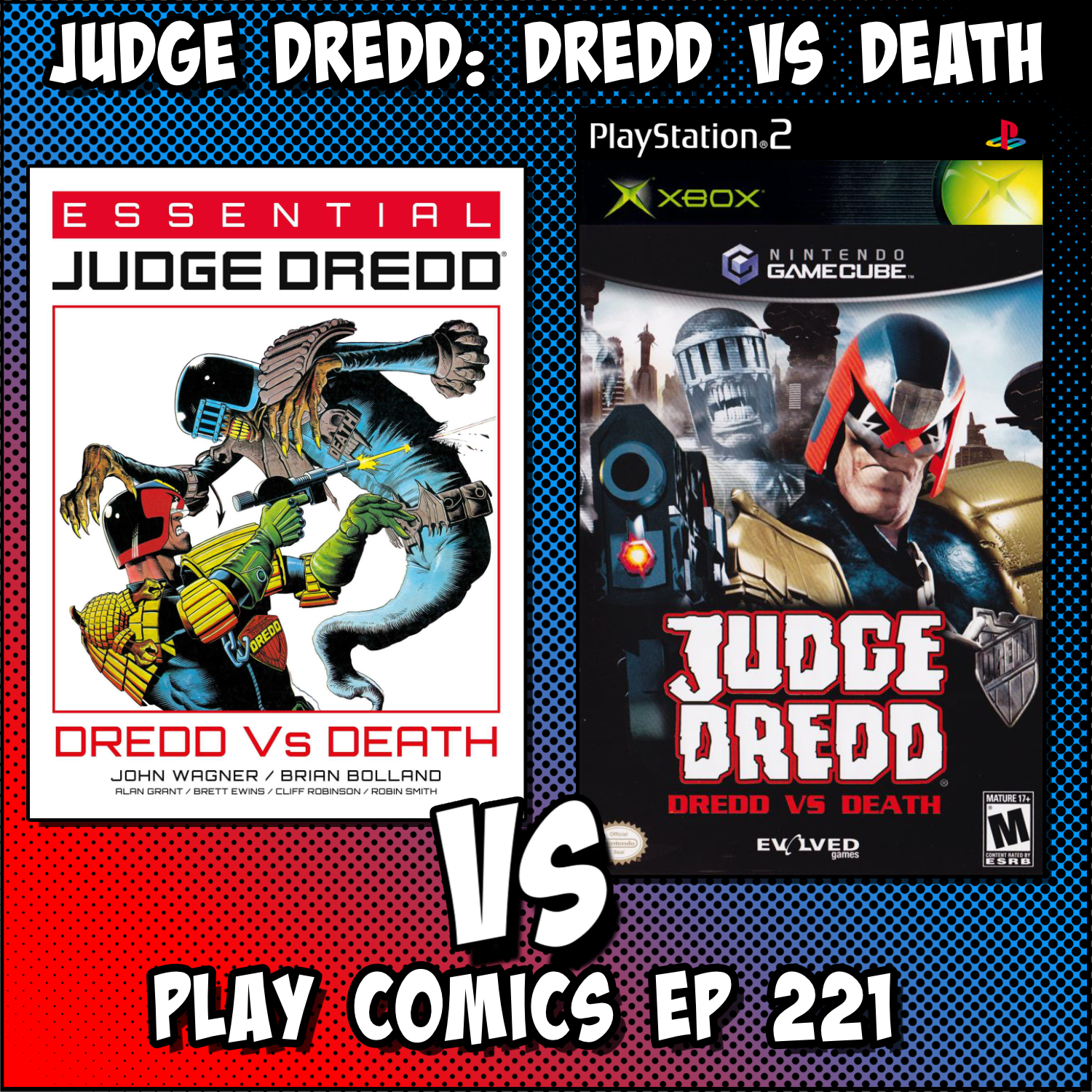
Lock and load your law enforcement credentials, plug in your justice-dispensing visor, and prepare for some megacity-sized mayhem as Play Comics dives into the brutal, unforgiving world of Judge Dredd: Dredd vs Death—the PSX, Xbox, and GameCube shooter that proved you could make a genuinely compelling Judge Dredd game if you weren’t afraid to lean into the dystopian carnage and stylized ultraviolence that makes Mega-City One such a joy to read about. Released when Judge Dredd was already a 2000 AD institution spanning decades of comic book brutality, this game took the Dredd vs Death story arc and transformed it into a first-person adrenaline rush where the law doesn’t negotiate—it just executes.

This week, we’re absolutely thrilled to welcome the phenomenally knowledgeable Chloe Maveal from the official 2000 AD podcast In Orbit Every Wednesday, where she and her co-host Molch-R break down the Galaxy’s Greatest Comic with the kind of passion and insight that would make even Judge Dredd stop and listen (okay, maybe not, but he’d at least acknowledge it happened). Chloe is also the publisher behind the critically acclaimed TRASH HUMPER zine, where she explores everything from comics criticism to culture with a sharp, witty eye. When she’s not busy being the voice of sophisticated 2000 AD fandom, she’s creating comics-focused content that makes you think twice about what you’re reading.

Together, we’ll investigate whether this brutal pixel-based interpretation of Judge Dredd’s most gothic storyline managed to capture what makes the Judge such an iconic character—a faceless instrument of a broken justice system who’s somehow still the hero we deserve, even if we don’t deserve him. Does the gameplay hold up after all these years, or does it feel like it belongs in the Iso-Cube? How faithful does it stay to the source material, and does that even matter when you’re blasting away at demonic horrors and mutant abominations in a mega-city dystopia? And perhaps most importantly: in a game where you’re literally fighting the undead, where does Judge Dredd rank among other video game adaptations of 2000 AD’s most iconic characters?

Grab your daystick, practice your best “I am the law” growl, and join us for an episode that’s guaranteed to be bloodier than a Justice Department discipline report.Continue Reading

Strap on your meat-based wrestling tights and oil up those biceps because Play Comics is about to suplex you straight into the absurdly wonderful world of Kinnikuman! This week we’re tag-teaming not one, but TWO Ultimate Muscle games—The Path of the Superhero for GameCube and Legends vs New Generation for Game Boy Advance. That’s right, we’re going double or nothing like a Choujin who forgot leg day exists and decided to compensate with twice the spandex.

These games, spawned from the legendary Kinnikuman manga and anime, brought us a universe where wrestling isn’t just a sport—it’s the entire basis of intergalactic civilization, which honestly makes about as much sense as any other comic book logic we’ve tackled on this show. Whether you’re commanding Kid Muscle through his heroic quest to not embarrass his legendary father or settling the age-old debate of who would win between old-school wrestlers and the new generation (spoiler: everyone’s finishing move is magnificently ridiculous), we’ve got you covered.

Joining us for this muscle-bound mayhem is none other than SerpyMatt, who hasn’t quite gotten around to launching his own podcast yet—but he’s told me the concept and folks, when it finally drops, you’re going to absolutely love it. Assuming he ever stops procrastinating long enough to record episode one, that is.

So crack your knuckles, practice your most intimidating wrestler growl, and prepare for an episode that’s guaranteed to have more body slams than a physics textbook thrown at a trampoline factory. It’s time to find out if these games captured the magnificent weirdness of their source material or if they just left us feeling like we got hit with the Kinniku Buster of disappointment.Continue Reading

Gather around power-level enthusiasts and tournament fighters, because this week on Play Comics we’re charging up our ki and diving headfirst into the legendary slugfest that is Dragon Ball Z: Budokai for PS2 and GameCube. That’s right, we’re looking at the 2002 fighting game that asked the burning question “What if we took the first three arcs of Dragon Ball Z and squeezed them into a button-mashing experience that makes even the most patient Z-Fighter want to go Super Saiyan with frustration?”

Developed by Dimps and published by Infogrames (back when they still existed and weren’t just a nostalgic memory floating in gaming’s hyperbolic time chamber), this cel-shaded beatdown promised to let players experience everything from Raditz’s surprise family reunion to Cell’s perfectionist power trip. What it delivered was a fighting system so basic that even Yamcha could probably figure it out, paired with enough beam struggles to make your thumbs file for workers’ compensation.

Joining us for this Saiyan-sized discussion is the one and only Doc Issues from Capes on the Couch, because when you need someone to analyze the psychological implications of repeatedly punching people until they explode into light particles you call a professional. Together we’ll explore how this game managed to compress roughly 100 episodes of screaming, power-ups, and “next time on Dragon Ball Z” frustrating end caps into a tournament format that somehow made sense.

So grab your orange gi, practice your best Kamehameha stance, and prepare for an episode that’s over 9000 times more entertaining than waiting five episodes for Goku to finish charging his spirit bomb. Will this manga-to-game adaptation achieve its final form? Or will it get sent to Other World faster than you can say “Kakarot”? Time to find out if this Z-Fighter deserves a senzu bean or a one-way ticket to Snake Way!Continue Reading

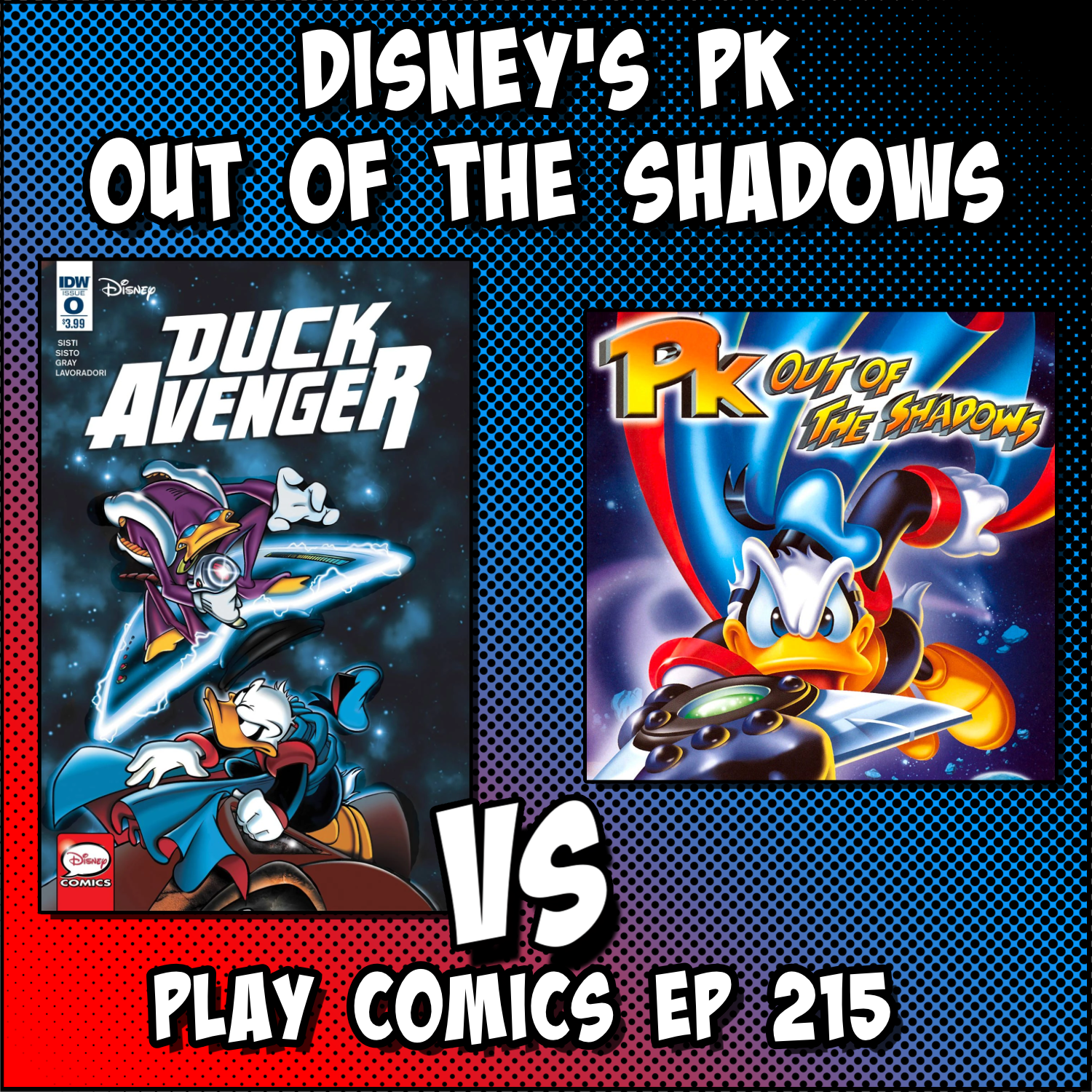
Holy hybridized heroes and gamma-powered game adaptations, comic crusaders! This week on Play Comics, we’re diving beak-first into the pixelated pandemonium that is Disney’s PK: Out of the Shadows for PS2 and GameCube – because apparently someone thought the best way to honor The New Papernick Adventures (or The Duck Avenger for us North American folks) was to trap Donald Duck’s superheroic alter ego in a 3D action-adventure that makes even the most patient gamers quack under pressure.

Released in 2002 by Ubisoft Casablanca, this cel-shaded space opera promised to let players wield PK’s X-Transformer gadgetry while battling the dastardly Evronians in their quest for galactic domination. What it actually delivered was a gaming experience that had all the depth of a Duckburg puddle and combat mechanics so repetitive that even One, PK’s AI companion, probably wished he could compute his way out of this digital disaster.

Joining us for this intergalactic expedition into mediocrity is Esh Johansen from the YouTube channel Fiction Addiction – a man who’s already subjected himself to this very game and lived to tell the tale with his signature blend of wit and existential gaming dread. Together, we’ll explore how this comic book adaptation managed to take one of Disney Italy’s most innovative sci-fi superhero series and transform it into a linear platformer that makes rescuing scientists feel like actual work.

So grab your cape and prepare for an episode that’s infinitely more entertaining than grinding through the same alien duck enemies for hours on end – which, let’s be honest, isn’t exactly setting the bar at Ducklair Tower heights. Will this Evronians-versus-earthlings adventure redeem itself through sheer nostalgic charm, or will it vanish into the shadows faster than Donald’s secret identity? Tune in to discover if this galactic game deserves a place in the Hall of Heroes… or should be banished to the Phantom Zone alongside Superman’s worst enemies!Continue Reading

Welcome, card-slinging strategy seekers, to another episode of Play Comics where we shuffle through the deck of comic-to-game adaptations with all the precision of a first-turn Exodia draw gone horribly wrong! Today we’re summoning not one, but TWO Yu-Gi-Oh! adventures that took Yugi’s world from the small screen to handheld hysteria and living room chaos.

First up, we’re diving into Yu-Gi-Oh! Worldwide Edition – Stairway to the Destined Duel for the Game Boy Advance, a portable card battler that somehow managed to cram the entire Battle City tournament into a device smaller than Joey’s brain capacity. Then we’re teleporting to the GameCube dimension with Yu-Gi-Oh! The Falsebound Kingdom, where virtual reality meets real-time strategy in a combination so bizarre it makes Kaiba’s obsession with ancient Egyptian card games seem perfectly reasonable.

Joining us for this interdimensional dueling discussion is the magnificent GothJon from the 2 ACT podcast, whose expertise in anime, cinema, and all things delightfully dark makes him the perfect co-host to help us navigate these shadow realm gaming adventures. Whether we’re discussing the satisfying simplicity of portable dueling or the ambitious madness of strategic monster management, GothJon brings the kind of analytical insight that would make even Pegasus jealous.

So grab your duel disk, power up that millennium puzzle, and prepare for an episode that explores how faithfully these games captured the heart of the cards… or whether they sent us straight to the shadow realm of gaming disappointment. Will these Yu-Gi-Oh! adaptations prove they’ve got what it takes to stand the test of time, or will they end up banished to the extra deck of forgotten licensed gamesmes?

Time to duel… digitally!Continue Reading

Holy cowl-wearing console catastrophe, comic crusaders! This week on Play Comics we’re grappling-hooking our way into the surprisingly deep shadows of 2005’s Batman Begins video game – because apparently someone at Eurocom looked at Christopher Nolan’s gritty reboot and thought, “You know what this needs? A fear meter and the ability to summon actual bats to terrify thugs into submission!”

Released across more platforms than Batman has traumatic childhood memories, this movie tie-in somehow managed to land on PS2, Xbox, GameCube, and Game Boy Advance without completely embarrassing itself in the process. While most movie games crash and burn faster than if I tried to drive the Batmobile, this stealth-action adventure actually tried to do something interesting with its “High Frequency Transponder” gadget and environmental intimidation mechanics that made enemies drop their weapons in sheer terror.

Joining us for this digital descent into Gotham’s criminal underworld is the incredibly talented Wells Thompson, creative mastermind behind indie comic sensations and the brilliant mind that helped bring us The Scorpion and the Queen (among a bunch of other Kickstarter projects) and the force over at WellsThompson.com. Wells brings his unique perspective on comic storytelling and adaptations to help us figure out whether this game captured the essence of both the Dark Knight’s origin story and Nolan’s cinematic vision, or if it belongs in Arkham Asylum alongside the rest of the movie tie-in disasters.

From the surprisingly robust stealth segments that actually rewarded patience over button-mashing, to those Batmobile sequences that had us questioning our life choices, we’ll explore how this Eurocom-developed title managed to be the last Batman movie to get a proper video game adaptation – and whether that’s a good thing or a tragedy. So grab your utility belt and join us as we investigate whether fear really is the best weapon, or if this game should have stayed in the cave where it belongs!Continue Reading

Flame on, podcast listeners! This week we’re stretching our way back to 2005 to tackle the Fantastic Four game that somehow managed to land on more consoles than Reed Richards has had scientific breakthroughs. Based on the first Fox movie that made us all question whether Hollywood truly understood what “fantastic” meant, this multi-platform adventure promised to let us clobber our way through levels faster than Ben Grimm goes through doorframes.

Joining us for this cosmic-powered gaming expedition is Anthony Sytko from Capes on the Couch, who’s here to help us determine whether this game was the ultimate power or just another case of “it’s clobberin’ time” gone wrong. We’ll be exploring how this tie-in game managed to squeeze onto everything from GameCube to Game Boy Advance, and whether any version actually captured the magic of Marvel’s first family – or if they all just left us feeling more invisible than Sue Storm on a bad day.

So grab your unstable molecules costume and prepare for a gaming experience that’s sure to be more unpredictable than Johnny Storm’s dating life. It’s time to see if this Fantastic Four adaptation was truly marvelous or just another victim of the superhero movie game curse!Continue Reading

Welcome back, web-slingers and button-mashers, to another delightfully unhinged episode of Play Comics! This week we’re crawling back to 2002, when flip phones were cutting-edge technology, everyone was still trying to figure out what the heck a “blog” was, and Activision decided the best way to capitalize on Sam Raimi’s Spider-Man movie was to let Treyarch loose with a development kit and what we can only assume were several energy drinks and a prayer.

We’re diving deep into the pixelated web-slinging wonderland that somehow convinced an entire generation that swinging through New York City while your webs mysteriously attach to invisible sky anchors was totally normal. This PS2, Xbox, GameCube, and Game Boy Advance spectacular managed to squeeze Tobey Maguire’s voice into a polygonal suit while adding enough extra villains to make you wonder if someone at Treyarch had been hoarding Spider-Man action figures since childhood and finally found an excuse to use them all.

Joining us for this nostalgic journey through early 2000s gaming jank is the magnificent Chris Ferrell from All Things Good and Nerdy and The Official GonnaGeek Show! Chris brings his encyclopedic knowledge of all things delightfully nerdy to help us navigate the treacherous terrain between movie adaptation and comic book faithfulness. He’s the perfect guide for exploring whether this game captured the essence of everyone’s favorite wall-crawler or just gave us a really expensive tech demo for air-based web physics that would make actual physics professors weep quietly into their coffee.

So dust off those sixth-generation consoles, prepare for some seriously chunky character models, and join us as we swing into action with a game that dared to ask the important question: “What if we took a two-hour movie and stretched it into twelve hours of gameplay by adding every Spider-villain we could think of?” The answer, as you’ll discover, involves more air combat than anyone expected and enough stealth sequences to make you appreciate that this was made before every game decided it needed a mandatory stealth section.

Get ready for web-slinging, wall-crawling, and more mid-air punching than should be physically possible – it’s time to find out if this early millennium marvel holds up or if it belongs in the same category as those websites that still think animated GIFs are the height of digital sophistication.Continue Reading

Hold onto your utility belts and prepare for maximum overdrive, because this week on Play Comics we’re crash-landing straight into the chaotic world of Teen Titans for PS2, Xbox, and GameCube – a game that somehow managed to capture the essence of being a superhero teenager while simultaneously making you question whether saving the world is worth the carpel tunnel. Released in 2006, this beat-’em-up bonanza promised players the chance to live out their fantasies of being part of the most dysfunctional yet lovable superhero team this side of Titans Tower.

Joining us for this digital adventure through Jump City’s finest is none other than Eilish Pickitt from my friendly neighborhood comic shop – a true connoisseur of all things four-color and someone who’s probably seen more comic-to-game adaptations crash and burn than a Cyborg system malfunction. Together, we’ll dive deep into whether this particular pixelated punch-fest managed to do justice to the beloved Cartoon Network series that ran from 2003 to 2006, or if it ended up being more disappointing than Beast Boy’s attempt at stand-up comedy.

From Robin’s acrobatic staff-spinning to Raven’s dark magic mayhem, this game promised to let you switch between all five Titans in real-time while delivering the kind of cooperative chaos that only comes from trying to coordinate a superhero team where one member transforms into animals and another shoots laser beams from her eyes. Whether you’re here for the nostalgic trip back to simpler times when the biggest worry was whether Starfire would accidentally destroy the kitchen again, or you’re just curious about how well this adaptation stacked up against the source material, grab your communicator and settle in.

This episode is guaranteed to be more entertaining than watching Cyborg try to explain why his breakfast took up half the grocery budget, and definitely more coherent than trying to follow Beast Boy’s logic during a heated argument about tofu.Continue Reading

HULK SMASH… your expectations! This week on Play Comics, we’re going green with rage as we dive into 2005’s The Incredible Hulk: Ultimate Destruction – the game that asked the important question: “What if we gave players the power to literally punch a helicopter out of the sky and then use a bus as a baseball bat?”

Developed by Radical Entertainment for the PS2, Xbox, and GameCube, this comic book adaptation threw subtlety out the window faster than Banner throws a tantrum. Forget stealth missions or carefully planned strategies – this game was all about embracing your inner gamma-powered toddler and turning entire city blocks into your personal sandbox of destruction.

Joining us for this episode of controlled chaos is Matt Storm from the fantastic podcasts “Fun” and Games and Reignite! They’ll help us explore how this title managed to capture the pure, unadulterated joy of being an unstoppable force of nature with anger management issues. Together, we’ll discuss whether throwing cars at military helicopters counts as a valid combat strategy, and why sometimes the best solution to every problem is just… more smashing.

So strap in, podcast listeners – we’re about to go from zero to “HULK STRONGEST THERE IS!” faster than you can say “you wouldn’t like me when I’m angry.” Warning: No buildings, vehicles, or military installations were harmed in the making of this episode… but we can’t make the same promise about our gaming controllers.Continue Reading

Get ready to tattoo the number XIII on your memory banks (preferably not on your collarbone) as Play Comics dives into the cel-shaded, amnesia-riddled world of XIII – the video game adaptation that brought Jean Van Hamme’s acclaimed French graphic novel series to life on PS2, Xbox, and GameCube. This first-person shooter might be the only game where waking up on a beach with complete memory loss is just the beginning of your problems, not the end result of a gaming convention afterparty.

This week, we’re joined by the phenomenally talented Rob Duenas from the Sketchcraft YouTube channel, whose artistic prowess has graced everything from the hellish battlegrounds of “Spawn Kills Every Spawn” to beloved video game franchises like Crash Bandicoot and Overwatch. When Rob isn’t busy making comic pages look absolutely stunning or designing characters for your favorite games, he’s dropping knowledge bombs about art and creativity on his channel that would make even the most amnesia-addled protagonist remember how to hold a pencil.

Together, we’ll untangle the conspiracy-laden plot that had gamers frantically searching for their own identity while taking down government agents with stylized comic book “BANG!” and “BOOM!” sound effects popping up on screen. Was this 2003 cel-shaded shooter as revolutionary as its artistic style suggested, or did it wash up on gaming shores only to be quickly forgotten? Does the console version you played actually matter, or were the loading time differences just another conspiracy to keep Xbox owners feeling superior? And most importantly, how does a game based on a graphic novel series about a character who can’t remember who he is manage to create such memorable gameplay?

Grab your favorite tattered map with cryptic clues, practice your best “I have no idea who I am but I can somehow expertly use military weapons” face, and join us for an episode more twisty-turny than XIII’s plot itself!Continue Reading