

 Bruce Banner has the worst anger management plan in recorded history. Step one: don’t get angry. There is no step two, because the world is full of slow Wi-Fi, hold music, and a military that answers “please stop chasing me” by chasing him harder. It always ends the same way: one enormous green man, one miraculously intact pair of purple pants, and a repair bill the city will still be paying off in 2060.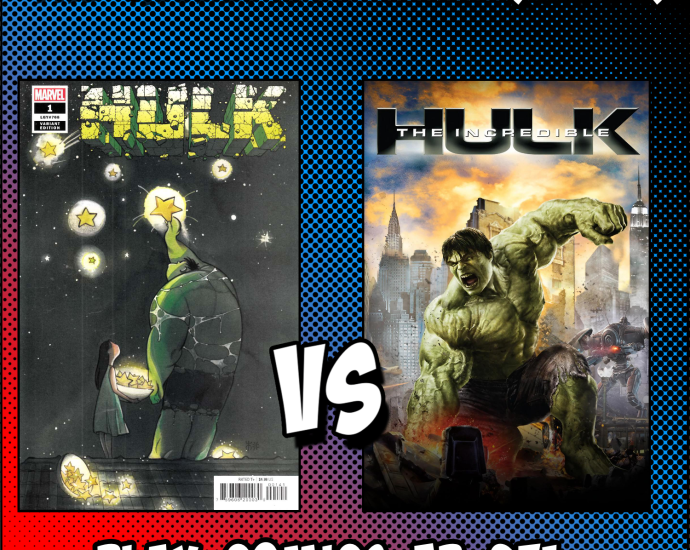
The Incredible Hulk (2008) with Russell Moran (Kaiju ComiCast)
Bruce Banner has the worst anger management plan in recorded history. Step one: don’t get angry. There is no step two, because the world is full of slow Wi-Fi, hold music, and a military that answers “please stop chasing me” by chasing him harder. It always ends the same way: one enormous green man, one miraculously intact pair of purple pants, and a repair bill the city will still be paying off in 2060.
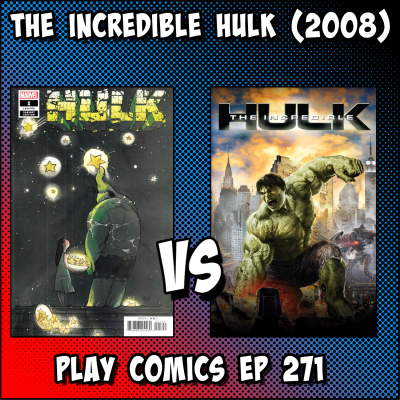
This episode is about The Incredible Hulk, the video game spun out of the 2008 film. It’s a story about a man who just wants a quiet life, a decent cup of coffee, and a cure, and who keeps getting interrupted by helicopters. His entire personality is a mood swing with a gym membership, and he is somehow still the most reasonable person in any room that contains Ross.
Returning to the show to take the green wheel is Russell Moran of Kaiju ComiCast. Russell spends his days with some of the biggest monsters ever to flatten a skyline, which makes him the one guest who won’t flinch when a city block gets treated like a chew toy. That gives us the big question: is the Hulk a superhero, or a kaiju with a great publicist and a gamma-radiation origin story? Russell is here to rule on it.
Keep a spare pair of stretchy pants handy, don’t make us angry in the comments, and let’s find out whether this one leaves you roaring or just leaves a very large hole in the wall.Continue Reading