Listen up, mutation enthusiasts and multi-platform adventurers, because this week on Play Comics we’re strapping on our Kevlar suits and diving straight into the bewildering, beast-infested, cross-console chaos of X-Men: The Official Game! We’re talking about the 2006 game that launched on practically every system known to mankind (GBA, GameCube, Nintendo DS, PS2, Xbox, and Xbox 360. Seriously, did they forget a platform?), which based the story nominally on the third X-Men film from Fox. You know, the one that showed us what happens when Professor Xavier and Magneto finally decided to outsource their beef settlement to a video game developer.

This particular romp through Marvel’s merry mutant universe was brought to you by the folks who looked at a film featuring Wolverine, Nightcrawler, and Iceman and thought, “What if we made this game SLIGHTLY different on each platform?” It’s like they were challenged to see just how elastic the definition of ‘the same game’ could be, and frankly, the results are beautifully inconsistent. The story was co-written by Chris Claremont (yes, THAT Chris Claremont) and Zak Penn, and it featured voice acting from the actual film cast, which means you got Hugh Jackman’s growl in your living room, your handheld, and probably also your neighbors’ living rooms at 2 AM.

Joining us to make sense of this portable and stationary pandemonium is none other than Alex Zalben from Comic Book Club, a weekly live talk show about comics that’s been running since 2006, performed at every major comic convention you can think of, written up in the New York Times more than once, and hosted literally hundreds of guests with more swagger than most podcasts muster in a lifetime. Alex is a writer, editor, and podcaster who knows his way around both four-color storytelling and video game adaptations, making him the perfect guide to help us determine whether this cross-generational, cross-console adventure managed to capture what makes the X-Men actually work, or if it just made us wish we could teleport away from our screens.

So sync up your Danger Room protocols, pick your favorite handheld or home console, and get ready for an episode that’s guaranteed to be more chaotic than a Sentinel factory explosion and infinitely more confusing than trying to figure out why THIS game exists on THAT console!Continue Reading

Attention, galaxy defenders and neuralyzer-dodging citizens! This week on Play Comics, we’re suiting up to tackle Men in Black II: Alien Escape, a title that hit the PS2 and GameCube with all the grace of a cockroach climbing out of a dumpster. We are looking at a game that saw the plot of the second movie, shrugged, and decided that what the franchise really needed was a run-and-gun shooter where Agent K looks less like a grizzled veteran and more like an Elvis impersonator midway through a bad Vegas residency.

Joining us to figure out why the Class 7 Ozone Demogrifier sounds like a vacuum cleaner you’d buy from a 3 AM infomercial is the omnipresent Doug Fink. You know him, you love him, and you can hear him on Walloping Websnappers, Novel Gaming, Falling with Style, and Skreeonk, all of which are on the Glitterjaw Podcast Collective. Together, we’re diving deep into a game that proves you don’t actually need the likeness rights to your main characters to ship a product, provided you have enough aliens to splatter across a corridor that looks exactly like the last five corridors you just ran through.

So put on your Ray-Bans, check your memories at the door, and prepare for an episode that makes about as much sense as putting a Ballchinian in a post office.Continue Reading

Grab your custom jutsu hand seals and prepare to feel a crushing sense of inadequacy when comparing your reaction time to a ninja’s because we’re diving shadow clone deep into the first Naruto Ultimate Ninja game on PlayStation 2! This week we’re channeling our inner shinobi to explore how Bandai Namco took Masashi Kishimoto’s legendary manga about a determined orange-suited underdog and transformed it into a frantic button-mashing tournament fighter that somehow convinced an entire generation of fans that they could recreate iconic Naruto moments if they just hit the attack button fast enough and screamed at their TV harder than Naruto himself.

Released during the golden age of anime-to-console adaptations, the Naruto Ultimate Ninja games became the de facto way fans could live out their ninja fantasies—assuming your ninja fantasy involves janky camera angles, occasionally unresponsive inputs, and the kind of special effect visual soup that makes you wonder if you’re actually watching a jutsu or if your PS2 is just having a mild aneurysm. With fighters pulled straight from the Hidden Leaf Village and beyond, these games proved that sometimes the best way to honor a beloved manga is to give players the chance to make Naruto fight characters he had absolutely no reason to fight (looking at you, random filler villains).

This episode, we’re absolutely stoked to welcome Cory Byrd from Byrds Eye View Comics—a fellow enthusiast of all things sequential art and gaming who can probably explain why Naruto’s popularity transcended manga, anime, AND video games with the kind of clarity that makes marketing departments weep with envy. Together, we’ll investigate whether these games managed to capture the heart, humor, and hyperkinetic energy of Kishimoto’s creation, or if they just left us face-first in the dirt like Naruto at the beginning of the series.

So synchronize your chakra, practice your most devastating combo, and prepare for an episode that’s guaranteed to be more chaotic than a Sand Village invasion and infinitely more entertaining than watching filler arcs about onigiri eating contests.Continue Reading

Lock your squad into formation, charge your bolters, and prepare your genetically-enhanced blue skin for a parade of panzer-busting action because this week on Play Comics we’re putting boots to dirt in the grim, industrial wastelands of Rogue Trooper, the 2005 third-person shooter that took Gerry Finley-Day and Dave Gibbons’s iconic tale of a genetically engineered super-soldier and transformed it into a cover-based combat experience that somehow managed to capture the grit, the fury, and the desperate isolation of being a lone warrior against overwhelming odds. Originally deployed across PS2, Xbox, and Wii, Rogue’s had more platform changes than a soldier has armor repairs, eventually landing a remaster invasion on PS4, Xbox One, and Nintendo Switch, proving that some grimdark British sci-fi concepts just refuse to stay buried in the trenches.

Speaking of refusing to stay down, we’re genuinely thrilled to have Steve Morris from Shelfdust joining us for this deep dive. When he’s not busy operating as the marketing manager for 2000 AD itself, essentially being the guy who decides which corner of Judge Dredd’s dystopia gets the spotlight treatment, he’s the critical voice behind one of comics fandom’s most thoughtful, hilarious, and incisive podcast ecosystems. Steve brings both the insider knowledge of how 2000 AD operates AND the fan’s perspective that makes him the perfect guide through this particular adaptation’s journey from glossy magazine pages to console warfare.

Together, we’ll investigate whether this hyper-violent squad-based adventure managed to capture what makes Rogue Trooper such an enduring character, a soldier stripped of everything but his wits, his weapons, and three AI companions implanted directly into his equipment. Does the game understand the existential dread of being created solely as a weapon? Can it convey the isolation that defines the character while also providing the kind of multiplayer mayhem that defines the era? And perhaps most importantly: does this game explain why blue skin became the ultimate badge of being expendable in the far future?

Grab your tactical visor, synchronize your biometric links, and prepare for an episode that’s more explosive than a Rogue Trooper ambush and considerably more thoughtful than you’d expect from a game about murdering aliens on a lifeless planet.Continue Reading

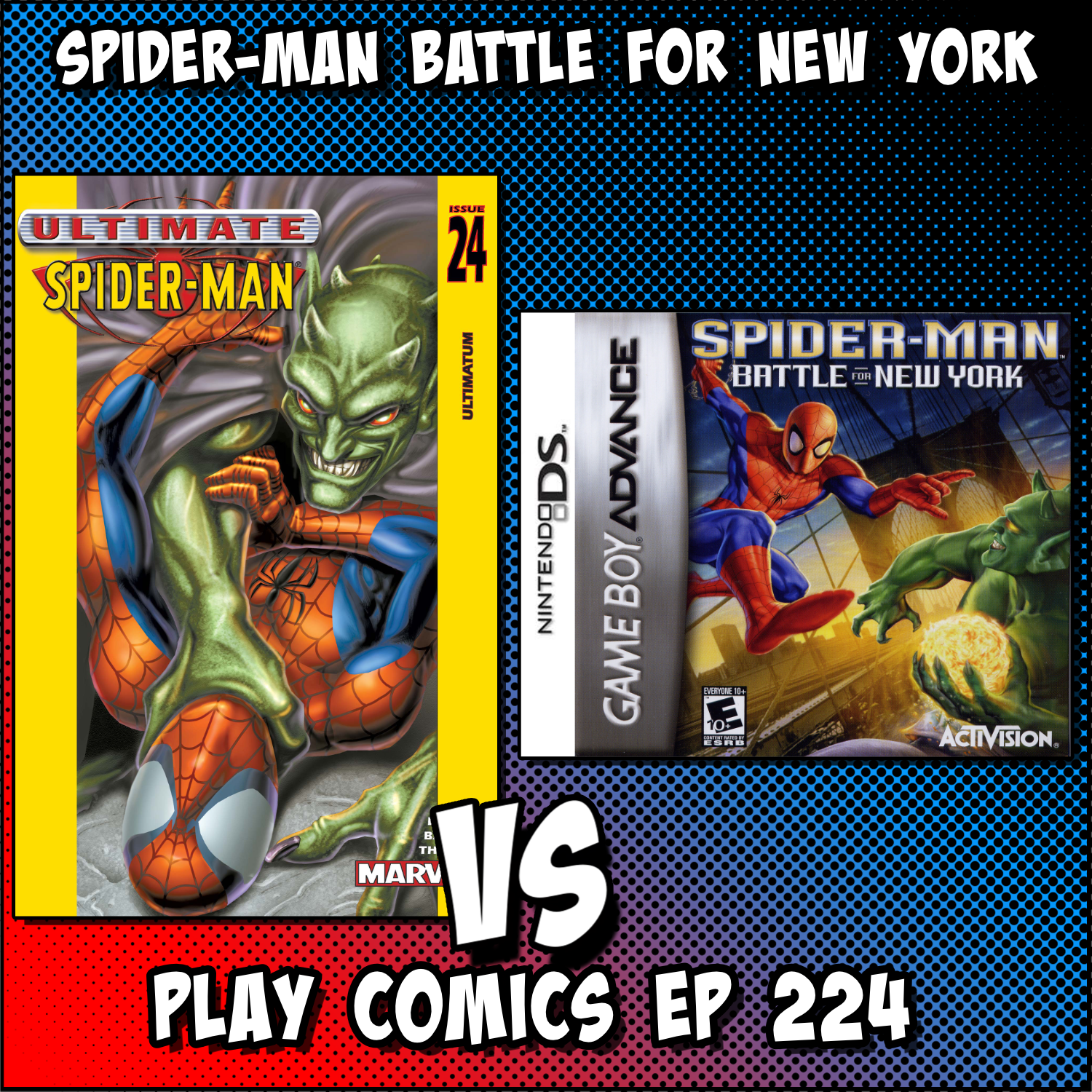
Welcome, web-slinging console warriors and handheld hop-scotchers! Prepare your cartridges and grab your controllers, because this week on Play Comics we’re diving into the gloriously chaotic streets of New York with Spider-Man: Battle for New York, the 2005/2006 portable powerhouse that took Brian Michael Bendis and Mark Bagley’s Ultimate Spider-Man universe and somehow crammed all of Manhattan’s mayhem into a GBA and DS-sized punch-up bonanza. Because apparently, someone looked at one of the most beloved comic runs of the 2000s and thought, “You know what this needs? A brawler where Spidey spends most of his time frantically hammering the same three buttons while dodging increasingly ridiculous villain attacks.”

Released across Game Boy Advance and Nintendo DS, this wasn’t your typical web-slinging adventure—it was more like someone distilled all of Ultimate Spider-Man’s most explosive moments into a side-scrolling arcade experience where the city itself becomes just as much of an enemy as Green Goblin ever was. With a roster of villains pulled straight from the comics and more “beat stuff up” objectives than you can shake a web at, this game proved that sometimes the best way to honor a beloved comic series is to completely reinvent what it means to be Spider-Man.

This week, we’re absolutely thrilled to welcome the phenomenally knowledgeable Jarrett Tyree from Has To Do With Spider-Man I Think, who brings an encyclopedic understanding of all things Arachnid and animated to help us untangle whether this game managed to capture the kinetic energy of Bendis’s run or if it just left our webbing all tangled in the wrong places. Jarrett’s the kind of Spider-expert who can probably explain exactly why this game makes the choices it does, while also gently reminding us that sometimes video game adaptations are more “inspired by” than “faithful to” the source material.

So strap in your web-shooters, prepare for some serious button-mashing mayhem, and get ready for an episode that explores whether this dual-platform adaptation is a hidden gem of portable gaming or just another case of “well, we had to do SOMETHING with this license.” Let’s see if Battle for New York is worth defending!Continue Reading

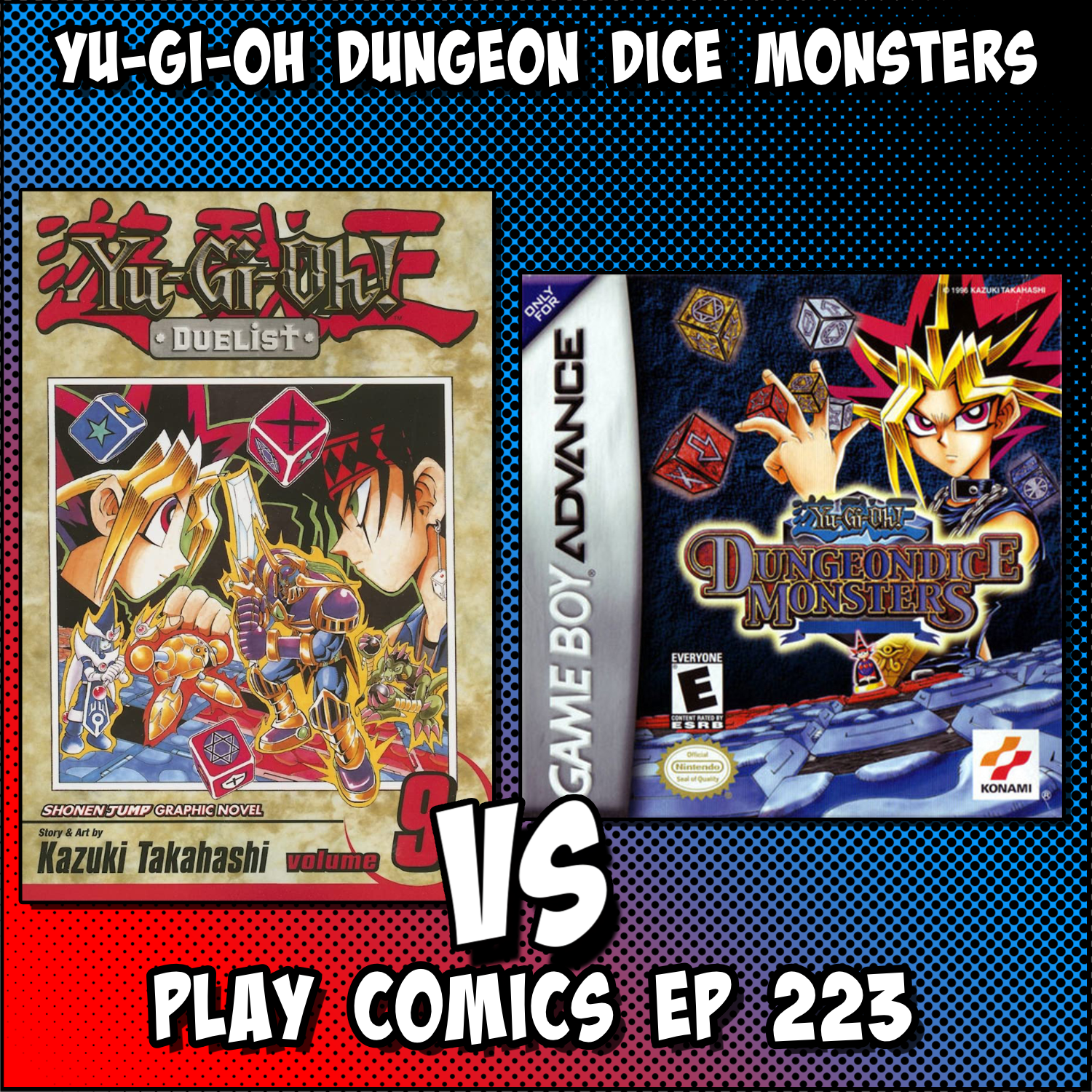
Crack open your Millennium Puzzle and prepare to roll some incredibly awkward polygonal dice, because this week on Play Comics we’re delving into one of the most bewildering spin-offs to ever stumble out of the Yu-Gi-Oh universe! We’re talking about Yu-Gi-Oh Dungeon Dice Monsters for the Game Boy Advance—a game so determined to turn Kazuki Takahashi’s trading card phenomenon into a dungeon crawler that it somehow forgot to ask if it should.

Joining us for this delightfully confusing journey through Dungeon Dice Monsters is none other than Marcus Stewart from Game Informer, who’s armed with the kind of gaming knowledge that only comes from actually playing this thing. Whether he’s here to defend it, destroy it, or just figure out what the heck is happening on a 240p screen, we’re thrilled to have his voice in the mix as we attempt to understand why anyone thought “card game meets roguelike dice mechanics” was the logical next step for the King of Games.

So lock your monsters in the vault, prepare your dice for rolling, and get ready for an episode that’s far less about card strategy and far more about watching two people gradually lose their minds over a game that inhabits some kind of strange liminal space between “ambitious experiment” and “fever dream at a game arcade.” The dice have been cast. The dungeon awaits. Our sanity? Well, that’s negotiable.Continue Reading

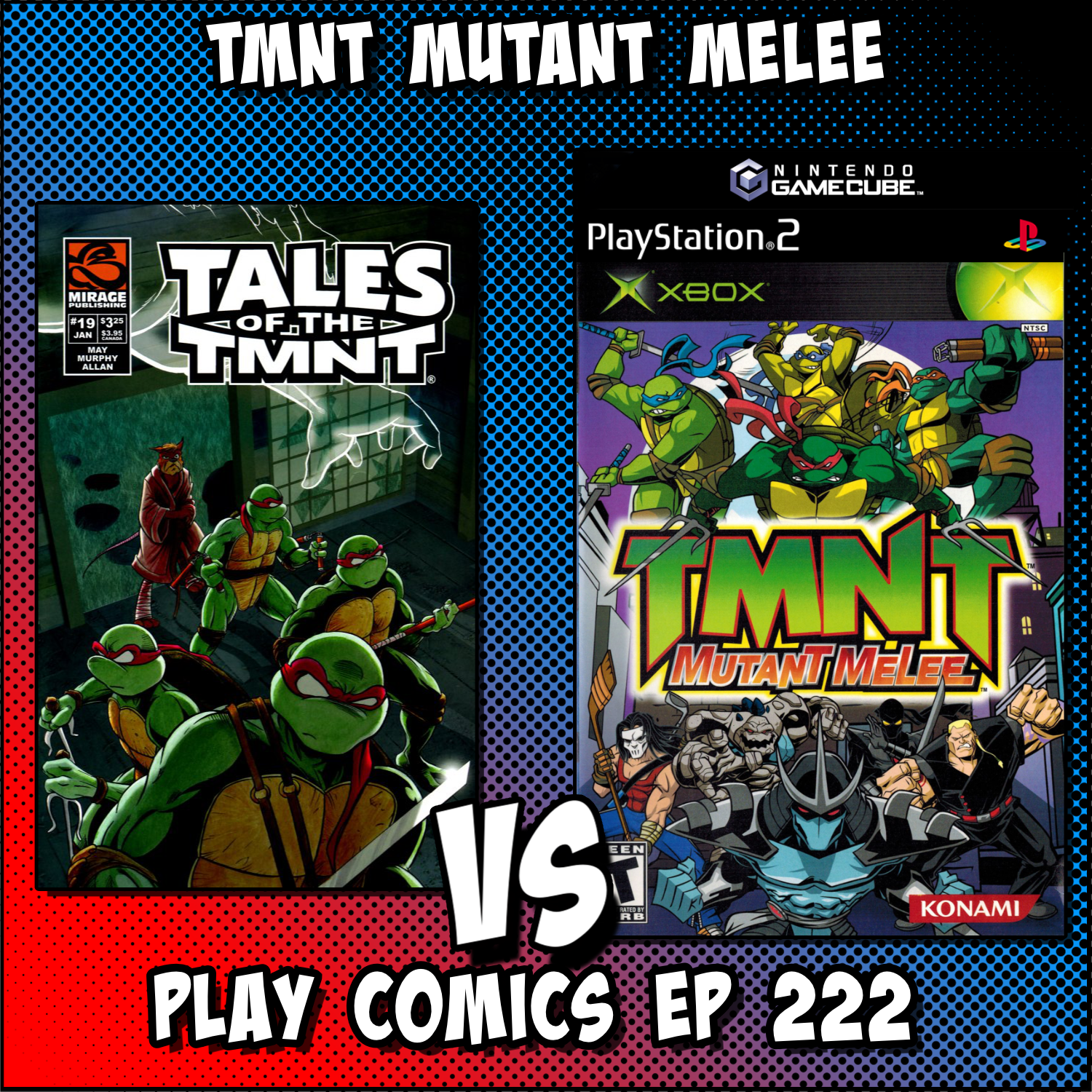
Dust off your cowabunga collection and prepare your fists for some serious turtle-powered mayhem, because this week on Play Comics we’re diving shell-first into TMNT: Mutant Melee, the 2005 arena-based fighting bonanza that took the 2003 animated series and asked the most important question: what if we just got all the turtles, their friends, AND their enemies into one room and let them beat the absolute snot out of each other? Developed by Konami for PS2, Xbox, GameCube, and PC, this isn’t your typical one-on-one fighter—it’s more like if Smash Bros and Power Stone had a shell-covered baby and that baby knew all of Splinter’s teachings.

Joining us for this body-slamming brawl is the incomparable Tommy Proffitt from Distant Echoes and Lee Carvallo’s Podding Challenge, a podcast wizard who understands the intricate art of dissecting character-based chaos and canon coherence like few others can. Plus being able to bring his signature blend of gaming nostalgia and comedic precision to help us determine if this colorful chaos simulator managed to capture the spirit of its source material or if it swung its nunchucks at empty air.

Together, we’ll navigate the treacherous waters of Last Man Standing mode, contemplate why anyone thought having 22 playable characters was a good idea, and investigate whether the game’s holiday-themed cosmetics (seriously—set the date to December 25th and watch the turtles rock Santa hats) are feature or bug.Continue Reading

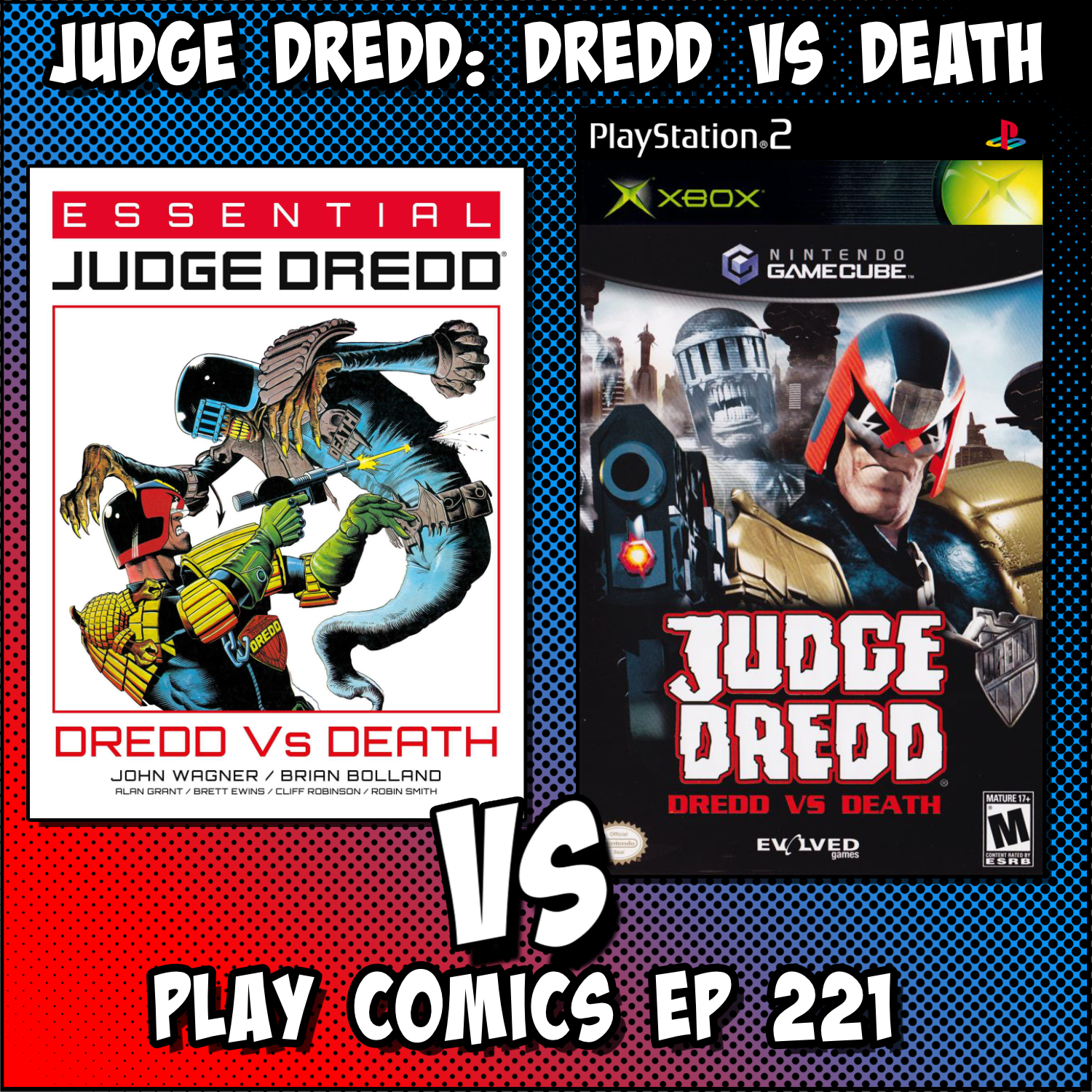
Lock and load your law enforcement credentials, plug in your justice-dispensing visor, and prepare for some megacity-sized mayhem as Play Comics dives into the brutal, unforgiving world of Judge Dredd: Dredd vs Death—the PSX, Xbox, and GameCube shooter that proved you could make a genuinely compelling Judge Dredd game if you weren’t afraid to lean into the dystopian carnage and stylized ultraviolence that makes Mega-City One such a joy to read about. Released when Judge Dredd was already a 2000 AD institution spanning decades of comic book brutality, this game took the Dredd vs Death story arc and transformed it into a first-person adrenaline rush where the law doesn’t negotiate—it just executes.

This week, we’re absolutely thrilled to welcome the phenomenally knowledgeable Chloe Maveal from the official 2000 AD podcast In Orbit Every Wednesday, where she and her co-host Molch-R break down the Galaxy’s Greatest Comic with the kind of passion and insight that would make even Judge Dredd stop and listen (okay, maybe not, but he’d at least acknowledge it happened). Chloe is also the publisher behind the critically acclaimed TRASH HUMPER zine, where she explores everything from comics criticism to culture with a sharp, witty eye. When she’s not busy being the voice of sophisticated 2000 AD fandom, she’s creating comics-focused content that makes you think twice about what you’re reading.

Together, we’ll investigate whether this brutal pixel-based interpretation of Judge Dredd’s most gothic storyline managed to capture what makes the Judge such an iconic character—a faceless instrument of a broken justice system who’s somehow still the hero we deserve, even if we don’t deserve him. Does the gameplay hold up after all these years, or does it feel like it belongs in the Iso-Cube? How faithful does it stay to the source material, and does that even matter when you’re blasting away at demonic horrors and mutant abominations in a mega-city dystopia? And perhaps most importantly: in a game where you’re literally fighting the undead, where does Judge Dredd rank among other video game adaptations of 2000 AD’s most iconic characters?

Grab your daystick, practice your best “I am the law” growl, and join us for an episode that’s guaranteed to be bloodier than a Justice Department discipline report.Continue Reading

Welcome, mechanical marvels and atomic adventurers! This week on Play Comics, we’re firing up our reactor cores and diving headfirst into the absolutely electrifying world of Astro Boy Omega Factor for the Game Boy Advance – because apparently someone at Banpresto looked at Osamu Tezuka’s groundbreaking manga and thought, “You know what this 1950s icon needs? A portable fighting game experience where he punches evil robots directly in their non-existent feelings.”

Released in 2003, this 2D brawler took the mighty atom himself and somehow convinced an entire development team that what fans REALLY wanted was the chance to mash buttons while watching our favorite nuclear-powered pint-sized hero exchange haymakers with increasingly ridiculous mechanical adversaries. Sure, the original manga was about philosophical questions of robot rights and what it means to be human, but why dwell on existential dread when you could just… punch things?

Joining us for this high-voltage episode is Hamish Steele from Super Mario Moment – a man who knows a thing or two about platform and fighting game mechanics, though probably with significantly fewer isotope-based superpowers than Astro Boy packs. Together, we’ll explore whether this GBA adaptation captured the essence of Tezuka’s revolutionary creation or if it just left us feeling like we’d been on the receiving end of one of Astro Boy’s arm cannons.

So charge up your atomic energy reserves, practice your most devastating uppercut, and prepare for an episode that’s absolutely radiating with gaming chaos. Will this manga adaptation prove to be a shining beacon of handheld excellence, or will it fizzle out faster than Astro’s battery in a poorly designed dungeon? Time to find out if this portable pugilist belongs in the Hall of Mighty Adaptations or the scrapheap of forgotten GBA obscurities!Continue Reading

Strap on your meat-based wrestling tights and oil up those biceps because Play Comics is about to suplex you straight into the absurdly wonderful world of Kinnikuman! This week we’re tag-teaming not one, but TWO Ultimate Muscle games—The Path of the Superhero for GameCube and Legends vs New Generation for Game Boy Advance. That’s right, we’re going double or nothing like a Choujin who forgot leg day exists and decided to compensate with twice the spandex.

These games, spawned from the legendary Kinnikuman manga and anime, brought us a universe where wrestling isn’t just a sport—it’s the entire basis of intergalactic civilization, which honestly makes about as much sense as any other comic book logic we’ve tackled on this show. Whether you’re commanding Kid Muscle through his heroic quest to not embarrass his legendary father or settling the age-old debate of who would win between old-school wrestlers and the new generation (spoiler: everyone’s finishing move is magnificently ridiculous), we’ve got you covered.

Joining us for this muscle-bound mayhem is none other than SerpyMatt, who hasn’t quite gotten around to launching his own podcast yet—but he’s told me the concept and folks, when it finally drops, you’re going to absolutely love it. Assuming he ever stops procrastinating long enough to record episode one, that is.

So crack your knuckles, practice your most intimidating wrestler growl, and prepare for an episode that’s guaranteed to have more body slams than a physics textbook thrown at a trampoline factory. It’s time to find out if these games captured the magnificent weirdness of their source material or if they just left us feeling like we got hit with the Kinniku Buster of disappointment.Continue Reading

Digivolve your PlayStation controllers and prepare to shuffle your way through the most wonderfully confused identity crisis in gaming history, because this week on Play Comics we’re tapping into the pixelated card-battling chaos that is Digimon Digital Card Battle for the PS1! Released in 2001 when every entertainment franchise on Earth was racing to cash in on the trading card game gold rush sparked by Pokémon and Yu-Gi-Oh, Bandai decided their digital monsters deserved a piece of that sweet, sweet card-slinging action. The twist? They didn’t just adapt the existing Digimon trading card game – oh no, that would be far too simple. Instead, they created an entirely NEW card game exclusively for this PS1 title, because apparently someone at BEC thought “You know what kids collecting physical cards really need? A completely different set of rules that only exists in digital form!”

What emerged was a gloriously polygonal fever dream where Veemon, Hawkmon, and Armadillomon became your partners in a card-battling odyssey through Battle Arenas, all while you sacrifice Digimon from your hand like some kind of digital monster cult leader gathering “DP” (Digivolve Points, not whatever your brain just went to) to evolve your creatures into increasingly ridiculous forms. It’s rock-paper-scissors meets card game mechanics meets “please stop making me grind the same battles 300 times to unlock the secret final boss.”

Joining us for this digivolved discussion is the phenomenally talented Sahoni from Bramble Wolf Games! When they’re not busy crafting games that actually mean something or channeling their Queer and Indigenous (ᏣᎳᎩᏱ ᏕᏣᏓᏂᎸᎩ) storytelling magic into unforgettable tabletop experiences, Sahoni brings their narrative expertise to help us understand how this PS1 oddity somehow convinced an entire generation that carrying around 30 digital cards was infinitely more practical than the hundreds of physical ones weighing down their backpacks.

So crack open that PS1 jewel case, practice your best “I’m going to pretend I understand these Support Card effects” face, and prepare for an episode more entertaining than watching the same Digimon battle animation for the 47th time. We’ll explore whether this card-game-that-never-was actually honored the spirit of the Digimon franchise, or if it just left us wondering why we couldn’t trade our digital cards with friends like we could in literally every other TCG game of the era!Continue Reading

Grab your duel disk and prepare for the ultimate test of patience, because this week on Play Comics we’re shuffling into the notoriously punishing world of Yu-Gi-Oh! Reshef of Destruction for Game Boy Advance! This 2003 Konami creation took the beloved manga and anime franchise and somehow managed to turn it into a gaming experience more brutal than being sent to the Shadow Realm by a pack of rare holographic cards.

Based on the wildly popular Yu-Gi-Oh series that taught an entire generation that the real power of friendship is having really expensive cards, Reshef of Destruction promised an epic adventure featuring Yugi, Joey, and the gang facing off against an ancient evil. What it delivered was a grinding experience so merciless that even seasoned duelists found themselves questioning their life choices faster than you can say “Exodia, obliterate!”

Joining us for this masochistic journey through the world of impossibly difficult AI opponents and deck-building restrictions is the absolutely delightful Max Golden from The Pop Quiz Podcast. When he’s not busy creating the most creative trivia games known to humanity or making movie nights infinitely more entertaining, Max brings his pop culture expertise to help us understand how this handheld nightmare somehow spawned from one of the most beloved franchises in entertainment history.

So dust off that Game Boy Advance, practice your most dramatic card-playing poses, and prepare for an episode that’s guaranteed to be more satisfying than finally beating that one opponent who’s been destroying your carefully crafted deck for the past three hours. We’ll explore whether this digital duel was faithful to its source material, or if it just left us feeling like we’d been trapped in our own personal tournament from Hell.Continue Reading

Gather around power-level enthusiasts and tournament fighters, because this week on Play Comics we’re charging up our ki and diving headfirst into the legendary slugfest that is Dragon Ball Z: Budokai for PS2 and GameCube. That’s right, we’re looking at the 2002 fighting game that asked the burning question “What if we took the first three arcs of Dragon Ball Z and squeezed them into a button-mashing experience that makes even the most patient Z-Fighter want to go Super Saiyan with frustration?”

Developed by Dimps and published by Infogrames (back when they still existed and weren’t just a nostalgic memory floating in gaming’s hyperbolic time chamber), this cel-shaded beatdown promised to let players experience everything from Raditz’s surprise family reunion to Cell’s perfectionist power trip. What it delivered was a fighting system so basic that even Yamcha could probably figure it out, paired with enough beam struggles to make your thumbs file for workers’ compensation.

Joining us for this Saiyan-sized discussion is the one and only Doc Issues from Capes on the Couch, because when you need someone to analyze the psychological implications of repeatedly punching people until they explode into light particles you call a professional. Together we’ll explore how this game managed to compress roughly 100 episodes of screaming, power-ups, and “next time on Dragon Ball Z” frustrating end caps into a tournament format that somehow made sense.

So grab your orange gi, practice your best Kamehameha stance, and prepare for an episode that’s over 9000 times more entertaining than waiting five episodes for Goku to finish charging his spirit bomb. Will this manga-to-game adaptation achieve its final form? Or will it get sent to Other World faster than you can say “Kakarot”? Time to find out if this Z-Fighter deserves a senzu bean or a one-way ticket to Snake Way!Continue Reading

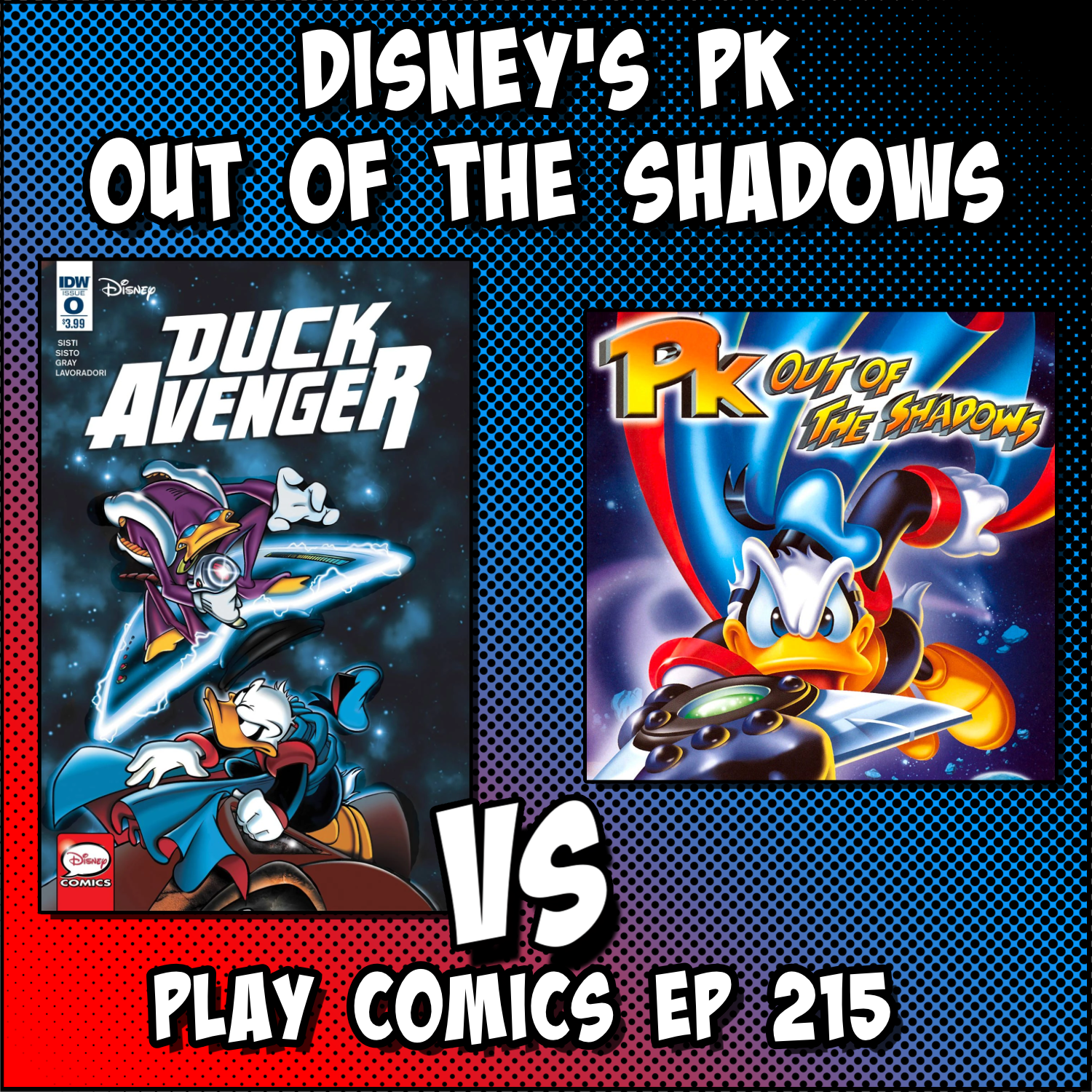
Holy hybridized heroes and gamma-powered game adaptations, comic crusaders! This week on Play Comics, we’re diving beak-first into the pixelated pandemonium that is Disney’s PK: Out of the Shadows for PS2 and GameCube – because apparently someone thought the best way to honor The New Papernick Adventures (or The Duck Avenger for us North American folks) was to trap Donald Duck’s superheroic alter ego in a 3D action-adventure that makes even the most patient gamers quack under pressure.

Released in 2002 by Ubisoft Casablanca, this cel-shaded space opera promised to let players wield PK’s X-Transformer gadgetry while battling the dastardly Evronians in their quest for galactic domination. What it actually delivered was a gaming experience that had all the depth of a Duckburg puddle and combat mechanics so repetitive that even One, PK’s AI companion, probably wished he could compute his way out of this digital disaster.

Joining us for this intergalactic expedition into mediocrity is Esh Johansen from the YouTube channel Fiction Addiction – a man who’s already subjected himself to this very game and lived to tell the tale with his signature blend of wit and existential gaming dread. Together, we’ll explore how this comic book adaptation managed to take one of Disney Italy’s most innovative sci-fi superhero series and transform it into a linear platformer that makes rescuing scientists feel like actual work.

So grab your cape and prepare for an episode that’s infinitely more entertaining than grinding through the same alien duck enemies for hours on end – which, let’s be honest, isn’t exactly setting the bar at Ducklair Tower heights. Will this Evronians-versus-earthlings adventure redeem itself through sheer nostalgic charm, or will it vanish into the shadows faster than Donald’s secret identity? Tune in to discover if this galactic game deserves a place in the Hall of Heroes… or should be banished to the Phantom Zone alongside Superman’s worst enemies!Continue Reading

Holy Gallic mayhem, comic crusaders! This week on Play Comics, we’re trading our Roman shields for DualShock controllers as we dive headfirst into the digital disaster that is Asterix & Obelix Kick Buttix for PS2 and Xbox – because apparently someone at Étranges Libellules thought the best way to honor René Goscinny and Albert Uderzo’s beloved comic masterpiece was to trap our favorite mustachioed warriors in a 3D brawler with combat mechanics more repetitive than Obelix’s “These Romans are crazy!” catchphrase.

Released in 2003 as Asterix & Obelix XXL in Europe before getting the wonderfully ridiculous “Kick Buttix” rebrand for American audiences, this licensed adventure promised players the chance to experience authentic Gallic village life while punching approximately 70 Romans per level across 40 different stages of cartoon chaos. What it actually delivered was a gaming experience so mindlessly button-mashy that even Caesar would file a complaint with customer service about the repetitive gameplay loop.

Joining us for this Roman-bashing bonanza is the incomparable Chas! Pangburn – a man who when he’s not busy lettering the actual Asterix comics from the depths of his creative dungeon, brings his insider knowledge of what makes these characters tick both on the page and in polygonal form. His expertise in both the source material and the art of comic creation makes him the perfect guide through this particular journey from panel to PlayStation.

So grab your magic potion and prepare for an episode that’s more entertaining than actually grinding through the same three enemy types for hours on end – which, let’s face it, isn’t exactly setting the bar at Vercingétorix levels. Will this portable Gallic adventure redeem itself through sheer nostalgic charm and cartoon physics, or will it crash harder than a Roman chariot race gone wrong? Tune in to discover if this comic adaptation belongs in the Hall of Fame… or should be buried deeper than one of those references that you’ll only catch if you read this in French!
Continue Reading

Welcome web-slinging warriors and joystick jockeys to another thrilling episode of Play Comics where we untangle the sticky situation of comic-to-game adaptations with the precision of Peter Parker trying to explain away his sudden photography skills! This week we’re diving headfirst into the cel-shaded spectacular that is Ultimate Spider-Man, the 2005 game that took Brian Michael Bendis and Mark Bagley’s comic masterpiece and somehow convinced every gaming platform from here to the Daily Bugle that they needed a piece of this web-slinging action.

Released across more systems than Spider-Man has quips in his arsenal—PS2, Xbox, GameCube, Game Boy Advance, and Nintendo DS—this Treyarch-developed adventure let players experience both sides of the symbiote coin. Whether you were swinging through Manhattan as everyone’s favorite wise-cracking wall-crawler or stomping around as the terrifyingly toothy Venom, this game promised to deliver more comic book authenticity than J. Jonah Jameson has anti-Spider-Man editorials.

Joining us for this ultimate discussion are two absolute legends from the podcasting multiverse: Derek B Gayle and Doug Fink, the dynamic duo behind Walloping Websnappers and a whole constellation of other fantastic shows on the Glitterjaw Queer Podcast Collective that may not be directly relevant to our web-slinging shenanigans today, but are undeniably brilliant nonetheless. When they’re not busy dissecting every Spider-Man cartoon ever created or exploring the depths of various other pop culture phenomena, these two bring their encyclopedic knowledge of all things Spider to help us determine whether this game truly captured the essence of the Ultimate universe or if it just left us feeling like we’d been caught in one of Green Goblin’s elaborate schemes.

So dust off those early 2000s gaming controllers, practice your best Venom growl, and prepare for an episode that’s guaranteed to be more entertaining than watching Eddie Brock try to explain his sudden career change from journalism to alien symbiote hosting!Continue Reading

Get ready for some black-and-white mayhem that’s more chaotic than trying to untangle Christmas lights while wearing oven mitts! This week on Play Comics, we’re diving headfirst into the wonderfully ridiculous world of Spy vs Spy for the original Xbox—the 2005 game that took MAD Magazine’s iconic feuding spies and somehow convinced them to blow each other up in glorious 3D.

This delightfully deranged espionage extravaganza comes courtesy of the twisted minds at Vicious Cycle Software, who apparently looked at the classic NES version and thought, “You know what this needs? More explosions and better graphics!” Whether you’re here for the nostalgic callback to those legendary MAD TV shorts or you just enjoy watching cartoon spies meet their doom in increasingly creative ways, this episode promises to deliver more backstabbing action than a corporate boardroom during budget season.

Joining us for this masterclass in mutual assured destruction are two absolute legends from the podcasting world: Anthony Sytko and Doc Issues, the brilliant minds behind Capes on the Couch. When they’re not busy psychoanalyzing superheroes and providing much-needed therapy to fictional characters who definitely have trust issues, these two bring their expertise in comic psychology to help us understand why watching two spies repeatedly murder each other is somehow deeply satisfying.

So dust off that original Xbox controller, practice your best evil laugh, and prepare for an episode that’s guaranteed to be more explosive than a briefcase full of dynamite left by your nemesis. We’ll explore whether this modern take on the classic formula captured the essence of those timeless comic strips, or if it just left us feeling like we’d been caught in one of the White Spy’s elaborate traps.Continue Reading

Welcome to another gloriously chaotic episode of Play Comics, where today’s adventure features everyone’s favorite lasagna-loving, Monday-hating tabby cat stumbling through the digital wasteland of Garfield: The Search for Pooky on the Game Boy Advance. Because apparently, losing a teddy bear is serious enough business to warrant an entire platforming odyssey filled with death pits, questionable physics, and mice that probably deserve their own organized crime documentary.

Joining us for this tale of feline desperation and handheld gaming horrors is the phenomenally creative Ryan Estrada—artist, author, and genuine adventurer who has somehow managed to create official comics for everyone from Star Trek to Popeye to (yes, indeed) Garfield himself. When he’s not crafting award-nominated graphic novels like Banned Book Club or wandering through actual adventures that sound like they belong in their own comic series, Ryan brings the perfect blend of insider knowledge and artistic sensibility to help us navigate this particular slice of orange cat chaos.

So grab your favorite plush companion (and maybe hide it somewhere safe), prepare for some seriously questionable level design choices, and settle in for an episode that explores what happens when beloved comic strip characters get translated into the unforgiving world of Game Boy Advance platforming. Will our heroes survive Garfield’s glacially-paced walking speed? Can anyone explain why this cat can leap tall buildings but still can’t find a simple teddy bear? And most importantly, does this game capture the essence of Jim Davis’s creation, or does it just make us want to curl up for a very long nap?Continue Reading

Welcome, card-slinging strategy seekers, to another episode of Play Comics where we shuffle through the deck of comic-to-game adaptations with all the precision of a first-turn Exodia draw gone horribly wrong! Today we’re summoning not one, but TWO Yu-Gi-Oh! adventures that took Yugi’s world from the small screen to handheld hysteria and living room chaos.

First up, we’re diving into Yu-Gi-Oh! Worldwide Edition – Stairway to the Destined Duel for the Game Boy Advance, a portable card battler that somehow managed to cram the entire Battle City tournament into a device smaller than Joey’s brain capacity. Then we’re teleporting to the GameCube dimension with Yu-Gi-Oh! The Falsebound Kingdom, where virtual reality meets real-time strategy in a combination so bizarre it makes Kaiba’s obsession with ancient Egyptian card games seem perfectly reasonable.

Joining us for this interdimensional dueling discussion is the magnificent GothJon from the 2 ACT podcast, whose expertise in anime, cinema, and all things delightfully dark makes him the perfect co-host to help us navigate these shadow realm gaming adventures. Whether we’re discussing the satisfying simplicity of portable dueling or the ambitious madness of strategic monster management, GothJon brings the kind of analytical insight that would make even Pegasus jealous.

So grab your duel disk, power up that millennium puzzle, and prepare for an episode that explores how faithfully these games captured the heart of the cards… or whether they sent us straight to the shadow realm of gaming disappointment. Will these Yu-Gi-Oh! adaptations prove they’ve got what it takes to stand the test of time, or will they end up banished to the extra deck of forgotten licensed gamesmes?

Time to duel… digitally!Continue Reading

Holy cowl-wearing console catastrophe, comic crusaders! This week on Play Comics we’re grappling-hooking our way into the surprisingly deep shadows of 2005’s Batman Begins video game – because apparently someone at Eurocom looked at Christopher Nolan’s gritty reboot and thought, “You know what this needs? A fear meter and the ability to summon actual bats to terrify thugs into submission!”

Released across more platforms than Batman has traumatic childhood memories, this movie tie-in somehow managed to land on PS2, Xbox, GameCube, and Game Boy Advance without completely embarrassing itself in the process. While most movie games crash and burn faster than if I tried to drive the Batmobile, this stealth-action adventure actually tried to do something interesting with its “High Frequency Transponder” gadget and environmental intimidation mechanics that made enemies drop their weapons in sheer terror.

Joining us for this digital descent into Gotham’s criminal underworld is the incredibly talented Wells Thompson, creative mastermind behind indie comic sensations and the brilliant mind that helped bring us The Scorpion and the Queen (among a bunch of other Kickstarter projects) and the force over at WellsThompson.com. Wells brings his unique perspective on comic storytelling and adaptations to help us figure out whether this game captured the essence of both the Dark Knight’s origin story and Nolan’s cinematic vision, or if it belongs in Arkham Asylum alongside the rest of the movie tie-in disasters.

From the surprisingly robust stealth segments that actually rewarded patience over button-mashing, to those Batmobile sequences that had us questioning our life choices, we’ll explore how this Eurocom-developed title managed to be the last Batman movie to get a proper video game adaptation – and whether that’s a good thing or a tragedy. So grab your utility belt and join us as we investigate whether fear really is the best weapon, or if this game should have stayed in the cave where it belongs!Continue Reading