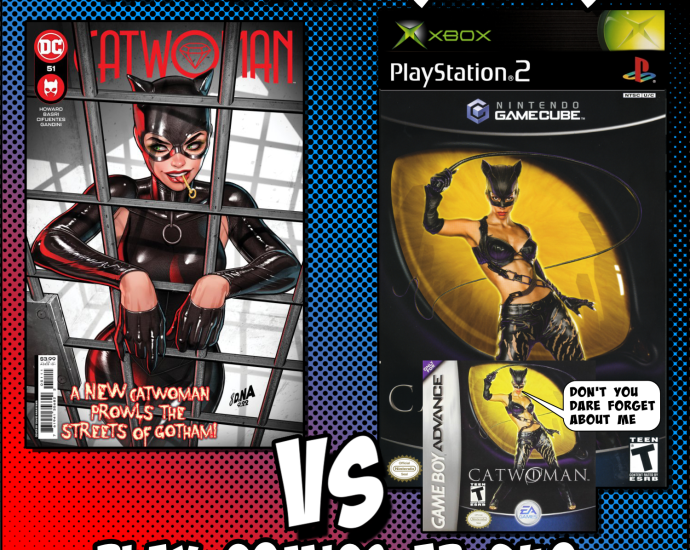


This time on Play Comics, we’re sneaking into the glittery, CGI-filled vault of early-2000s tie-in games and asking the question nobody demanded an answer to: “What if Catwoman, but make it even more 2004?” Between the leather, the eyeliner, and the wall-running, we’re checking out the Catwoman movie game that clawed its way onto GameCube, Xbox, PS2, and Game Boy Advance. It’s the kind of experience that feels like someone motion-captured an energy drink and then gave it a whip.

To help make sense of this pixelated fever dream, Chris is joined by frequent guest Billy from his real life friend group, because if you’re going to suffer through mid-2000s licensed game nonsense, you should at least do it with someone who can confirm you’re not hallucinating. Together they dive into the bizarre elegance of magically convenient scaffolding, combat that thinks “pressing one button a lot” is a personality trait, and a story that remembers it’s based on a movie just often enough to be legally distinct from fun. Expect more cat puns per minute than the ESRB ever intended.

So dust off your flip phone, crank up your nu-metal playlist, and prepare to swing through a world where glass windows are just suggestions and gravity is more of a guideline. Is this game an underrated gem, a misunderstood experiment, or the digital equivalent of stepping on a LEGO in high heels? Tune in to find out how this cinematic catastrophe translated to four different systems, and whether any of them managed to land on their feet.Continue Reading

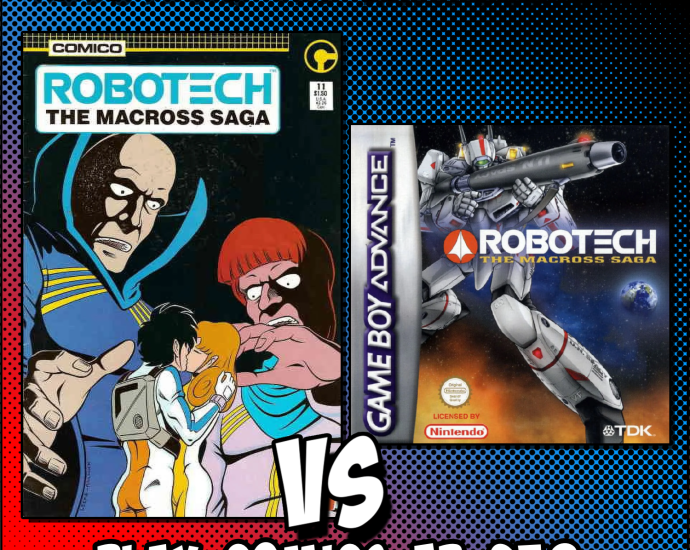
If you’ve ever dreamed of piloting a transforming jet while sorting through a love triangle and dodging alien laser fire, then without knowing it you’ve been living in the Robotech: The Macross Saga timeline. Chris dusts off his Game Boy Advance for this one, only to find that the same intergalactic mess has crash-landed again, this time in crisp Switch resolution. Because nothing says “future of gaming” like revisiting a handheld title from an era when batteries were a personality trait.

Helping navigate this space-time crossover is DC Dave from The Monitor Tapes, swooping in with the kind of insight only a seasoned comic podcaster can offer. Together, they dissect what happens when ’80s anime melodrama meets early 2000s portable gaming. And spoiler alert: there are missiles, misunderstood heroes, and at least one existential crisis per level. And yes, they both have Opinions™ about which version of Rick Hunter handles better.

So grab your nearest mecha (or whatever piece of furniture doubles as one), set your thrusters to “nostalgia,” and dive into a world where pixelated warfare meets the stirring strains of synth-pop destiny. Whether you’re a die-hard Robotech purist, a Switch newcomer, or just here for DC Dave’s hot takes, this episode’s got something for every flavor of space soap enthusiast.Continue Reading

Picture this: it’s the early 2000s, the first Fantastic Four film is about to hit theaters, and someone at a video game developer says, “You know what would be the perfect way to capitalize on this intellectual property? A side-scrolling action game on the Game Boy Advance where Reed Richards appears to have been replaced by his less scientifically-inclined brother in law (close enough, give me this one) and the Thing is made entirely of texture-mapping nightmares.” Congratulations, you’ve just invented Fantastic Four Flame On! It’s a game that managed to take four of Marvel’s most iconic heroes and somehow make them feel more constipated than a chemistry lecture taught underwater.

Joining us this week is the absolutely phenomenal Scott Niswander from NerdSync (the man who can explain the entire Marvel mythos while simultaneously making you question why the Human Torch doesn’t just solve every problem by setting it on fire) and It’s (Probably) Not Aliens (where not even Sue Storm’s force fields could save Ancient Aliens from the debunking). Together we’ll navigate a game so baffling in its design choices that you’ll start wondering if the developers were actually aliens trying to understand human entertainment and coming up just slightly short of the mark.

Will our heroes discover that the Game Boy Advance’s technical limitations somehow made this game better than it had any right to be? Can Scott explain why this game exists in a way that doesn’t make all of our brains feel like Alicia Masters trying to sculpt in the dark? And most importantly, does “Flame On” actually let you catch things on fire in any meaningful way, or is it just an elaborate metaphor for combusting under pressure? Strap yourself in for an episode more chaotic than trying to explain Fox’s Fantastic Four continuity to anyone born after 2010.Continue Reading

Grab your duel disk and prepare for the ultimate test of patience, because this week on Play Comics we’re shuffling into the notoriously punishing world of Yu-Gi-Oh! Reshef of Destruction for Game Boy Advance! This 2003 Konami creation took the beloved manga and anime franchise and somehow managed to turn it into a gaming experience more brutal than being sent to the Shadow Realm by a pack of rare holographic cards.

Based on the wildly popular Yu-Gi-Oh series that taught an entire generation that the real power of friendship is having really expensive cards, Reshef of Destruction promised an epic adventure featuring Yugi, Joey, and the gang facing off against an ancient evil. What it delivered was a grinding experience so merciless that even seasoned duelists found themselves questioning their life choices faster than you can say “Exodia, obliterate!”

Joining us for this masochistic journey through the world of impossibly difficult AI opponents and deck-building restrictions is the absolutely delightful Max Golden from The Pop Quiz Podcast. When he’s not busy creating the most creative trivia games known to humanity or making movie nights infinitely more entertaining, Max brings his pop culture expertise to help us understand how this handheld nightmare somehow spawned from one of the most beloved franchises in entertainment history.

So dust off that Game Boy Advance, practice your most dramatic card-playing poses, and prepare for an episode that’s guaranteed to be more satisfying than finally beating that one opponent who’s been destroying your carefully crafted deck for the past three hours. We’ll explore whether this digital duel was faithful to its source material, or if it just left us feeling like we’d been trapped in our own personal tournament from Hell.Continue Reading