


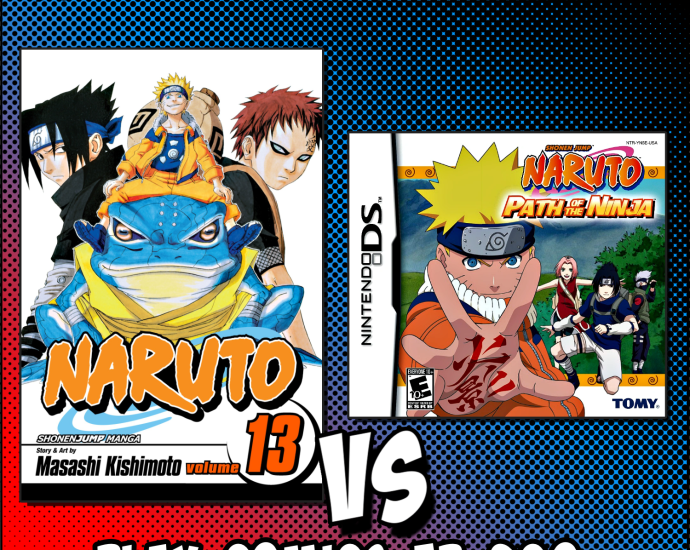
By the mid-2000s, Naruto had pulled off something most manga-to-anime properties never manage: it wasn’t just popular, it was everywhere, spinning off a small army of video games across nearly every system with a screen, like Naruto himself used Shadow Clone Jutsu on the entire games industry and nobody thought to stop him. Somewhere in that flood of Ninja Councils and Clash of Ninjas sits Naruto: Path of the Ninja, the entry that decided the best way to honor Kishimoto’s story wasn’t just punching (though there’s plenty of that too) but actually letting you live through the Land of Waves and the Chūnin Exams one turn-based battle at a time.

Path of the Ninja debuted on the Game Boy Advance in Japan back in 2004, then took a leisurely three years to reach American shelves in 2007, arriving on the Nintendo DS instead, because by the time they got around to localizing it, the GBA already felt like last decade’s news. You pick from six familiar faces, Naruto, Sasuke, Sakura, Shikamaru, Neji, and Rock Lee, pair them into formations for bonus combo attacks, and work through more than 90 jutsu, some of which you cast on the DS touchscreen by frantically scribbling a shape with the stylus, which is either a clever nod to hand seals or just a fun way to give yourself a cramp. The story runs all the way to the Chunin Exam invasion and a face-off with Shukaku, and if you’re wondering whether you can also fight Itachi as a secret bonus boss, the answer is: only if you own the Japanese version. The English release quietly deleted that fight but somehow forgot to scrub his name from the end credits, which is the video game equivalent of hiding a body and leaving the shovel leaning against the wall.

Making another through the Play Comics dojo is Merrilee O’Neil of Fear Coded, last seen on the show trying to keep pace with the Flash. This time she’s trading super speed for shadow clones, hand seals, and a Konoha headband, so at least the running is a little more sustainable.

So form your hand seals, grab your kunai pouch, and let’s find out if Path of the Ninja earned its headband as a worthy trip through early Naruto, or if it should’ve stayed back at the Academy with the rest of the genin.Continue Reading
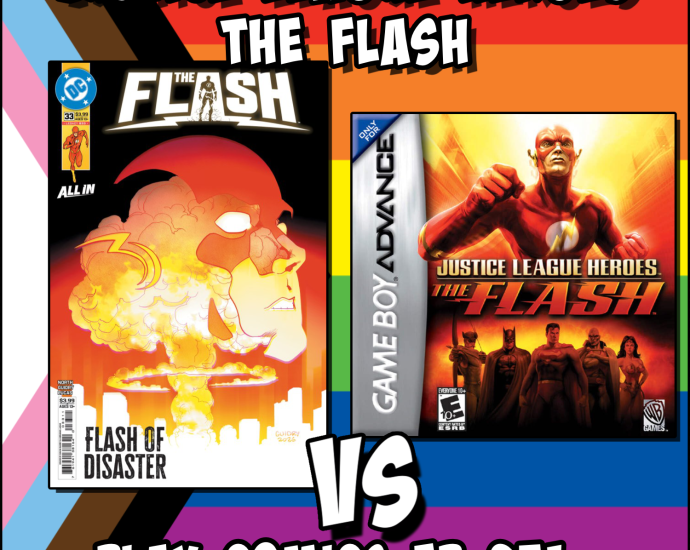
The year was 2006. The Game Boy Advance was winding down, the Justice League animated series had wrapped up, and someone at WayForward Technologies looked at a tiny handheld screen and said, “You know what this needs? The Flash. Running very fast. On a cartridge the size of a business card.” And honestly? Bold decision.

Justice League Heroes: The Flash took the Game Boy Advance, the beloved animated series, and a Justice League comic run and asked the eternal question: how many Rogues can you stuff into a handheld beat-em-up before the whole thing starts wobbling? This episode, we’re finding out. We’re covering the comics, the game, the cartoon connections, and whether Barry Allen or Wally West gets more respect in a world that keeps giving them both the speed force and zero chill.

Joining us to run this whole thing down is Marrilee O’Neil from Fear Coded, who brings exactly the right energy for a conversation about a game that moves fast and expects you to keep up.

So strap in, try not to blink, and let’s do this before the Flash gets impatient and reruns the episode himself.Continue Reading

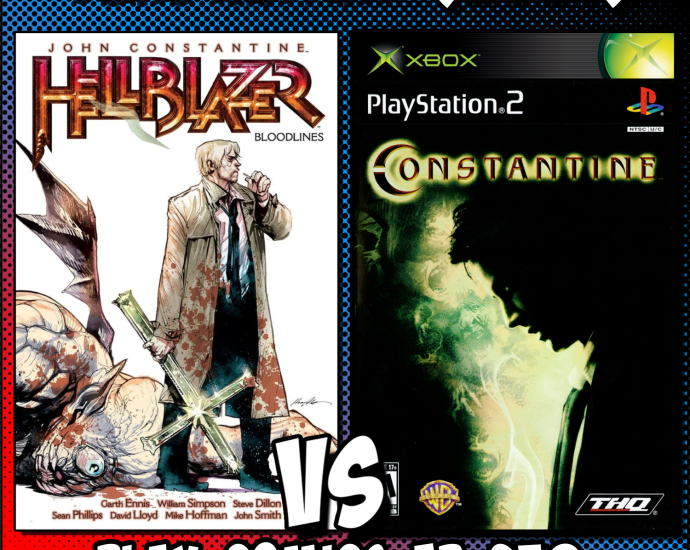
Some licensed games take you to fantastical worlds filled with wonder and adventure. This is not one of those games. This time on Play Comics we’re trudging through the smoke-filled, demon-splattered streets of Constantine (2005), the tie-in that asked, “What if we took Keanu Reeves, a theological horror film, and the PS2’s most dramatic lighting engine, and just… saw what happened?” Somehow it’s a third-person action game, a movie adaptation, and a vaguely spiritual experience about regretting your rental choices all at the same time.

Chris isn’t wandering this half-lit hellscape alone though. Merrilee O’Neil from Fear Coded jumps into the exorcism circle to help figure out where this game lands on the spectrum from “surprisingly solid” to “should’ve stayed in development hell.” Together they’re digging into how much of the comic DNA and film mood actually survived the trip through Bits Studios and THQ, and how often it just turns into early-2000s “shoot the demon, ask theology questions later” energy.

So grab your PS2 or Xbox controller, light a metaphorical cigarette (or maybe don’t, your lungs will thank you), and step into a world where holy relics share inventory space with questionable game design choices. Expect demons, exorcisms, and more snark than you can fit into one trench coat as Chris and Merrilee poke at what works, what doesn’t, and why this particular slice of licensed weirdness still lingers like the smell of burnt incense in a game store bargain binContinue Reading