


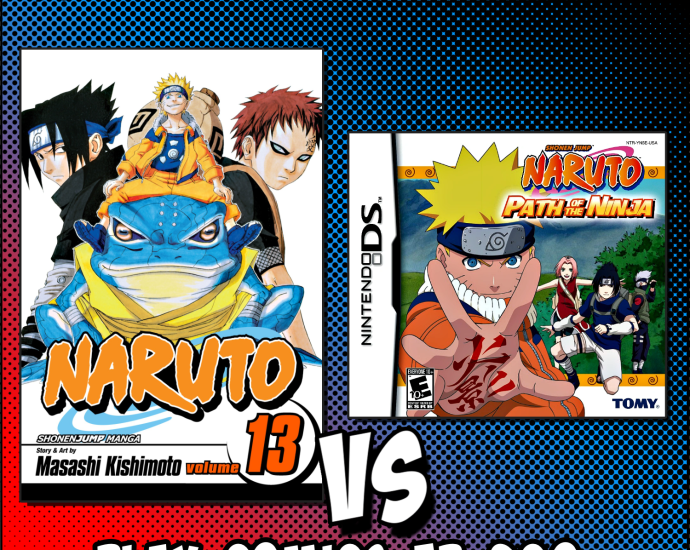
By the mid-2000s, Naruto had pulled off something most manga-to-anime properties never manage: it wasn’t just popular, it was everywhere, spinning off a small army of video games across nearly every system with a screen, like Naruto himself used Shadow Clone Jutsu on the entire games industry and nobody thought to stop him. Somewhere in that flood of Ninja Councils and Clash of Ninjas sits Naruto: Path of the Ninja, the entry that decided the best way to honor Kishimoto’s story wasn’t just punching (though there’s plenty of that too) but actually letting you live through the Land of Waves and the Chūnin Exams one turn-based battle at a time.

Path of the Ninja debuted on the Game Boy Advance in Japan back in 2004, then took a leisurely three years to reach American shelves in 2007, arriving on the Nintendo DS instead, because by the time they got around to localizing it, the GBA already felt like last decade’s news. You pick from six familiar faces, Naruto, Sasuke, Sakura, Shikamaru, Neji, and Rock Lee, pair them into formations for bonus combo attacks, and work through more than 90 jutsu, some of which you cast on the DS touchscreen by frantically scribbling a shape with the stylus, which is either a clever nod to hand seals or just a fun way to give yourself a cramp. The story runs all the way to the Chunin Exam invasion and a face-off with Shukaku, and if you’re wondering whether you can also fight Itachi as a secret bonus boss, the answer is: only if you own the Japanese version. The English release quietly deleted that fight but somehow forgot to scrub his name from the end credits, which is the video game equivalent of hiding a body and leaving the shovel leaning against the wall.

Making another through the Play Comics dojo is Merrilee O’Neil of Fear Coded, last seen on the show trying to keep pace with the Flash. This time she’s trading super speed for shadow clones, hand seals, and a Konoha headband, so at least the running is a little more sustainable.

So form your hand seals, grab your kunai pouch, and let’s find out if Path of the Ninja earned its headband as a worthy trip through early Naruto, or if it should’ve stayed back at the Academy with the rest of the genin.Continue Reading

Grab your custom jutsu hand seals and prepare to feel a crushing sense of inadequacy when comparing your reaction time to a ninja’s because we’re diving shadow clone deep into the first Naruto Ultimate Ninja game on PlayStation 2! This week we’re channeling our inner shinobi to explore how Bandai Namco took Masashi Kishimoto’s legendary manga about a determined orange-suited underdog and transformed it into a frantic button-mashing tournament fighter that somehow convinced an entire generation of fans that they could recreate iconic Naruto moments if they just hit the attack button fast enough and screamed at their TV harder than Naruto himself.

Released during the golden age of anime-to-console adaptations, the Naruto Ultimate Ninja games became the de facto way fans could live out their ninja fantasies—assuming your ninja fantasy involves janky camera angles, occasionally unresponsive inputs, and the kind of special effect visual soup that makes you wonder if you’re actually watching a jutsu or if your PS2 is just having a mild aneurysm. With fighters pulled straight from the Hidden Leaf Village and beyond, these games proved that sometimes the best way to honor a beloved manga is to give players the chance to make Naruto fight characters he had absolutely no reason to fight (looking at you, random filler villains).

This episode, we’re absolutely stoked to welcome Cory Byrd from Byrds Eye View Comics—a fellow enthusiast of all things sequential art and gaming who can probably explain why Naruto’s popularity transcended manga, anime, AND video games with the kind of clarity that makes marketing departments weep with envy. Together, we’ll investigate whether these games managed to capture the heart, humor, and hyperkinetic energy of Kishimoto’s creation, or if they just left us face-first in the dirt like Naruto at the beginning of the series.

So synchronize your chakra, practice your most devastating combo, and prepare for an episode that’s guaranteed to be more chaotic than a Sand Village invasion and infinitely more entertaining than watching filler arcs about onigiri eating contests.Continue Reading

Believe it or not, ninja enthusiasts, this week on Play Comics we’re kunai-diving into the pixelated shinobi wasteland that is Naruto: Ninja Council for the Game Boy Advance – because apparently someone at Tomy thought the best way to honor everyone’s favorite orange-clad ramen addict was to trap him in a handheld prison with combat mechanics more frustrating than trying to explain the Chunin Exams to your grandmother. Released in 2003, this side-scrolling “adventure” promised to let players master the art of ninjutsu while battling through iconic locations from the Hidden Leaf Village, but what it actually delivered was a gaming experience so repetitive that even Naruto’s shadow clone jutsu would get bored of itself.

Joining us for this digital journey through the Land of Mediocre Adaptations is Luke Herr from D’ohmance Dawn – a man who’s witnessed more anime-to-game train wrecks than a rejected Akatsuki recruitment video. Together, we’ll explore how this GBA “masterpiece” managed to spawn not one, not two, but THREE sequels despite having the gameplay depth of a puddle in the desert and graphics that make early Dragon Ball Z filler episodes look like Studio Ghibli productions.

So grab your headband and prepare for an episode that’s more entertaining than actually grinding through the same three enemy types for hours on end – which, let’s face it, isn’t exactly setting the bar at Hokage level. Will this portable ninja adventure redeem itself through sheer nostalgic chakra, or will it vanish faster than Sasuke after a family reunion? Tune in to discover if this manga adaptation belongs in the Hall of Fame… or should be sealed away forever like the Nine-Tailed Fox!Continue Reading