

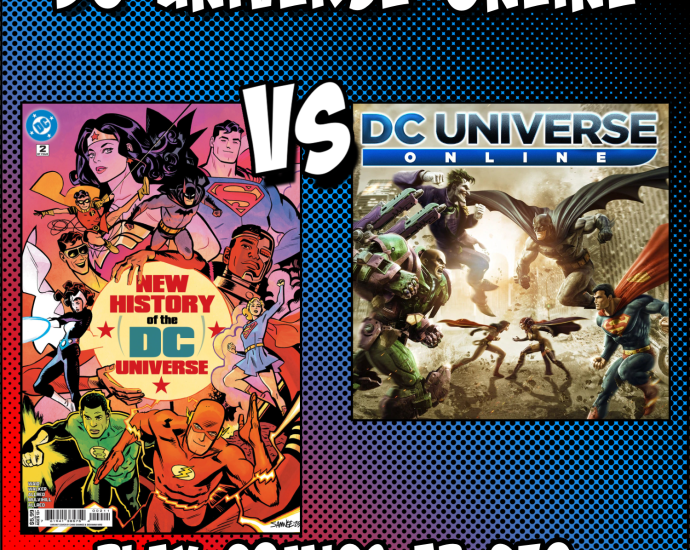
Congratulations! You’ve been hired by the Justice League. Your title is “Hero,” your qualifications are “showed up,” and your first assignment is standing in Metropolis next to Superman while a stranger in a very small cape asks you where the good loot is. Welcome to DC Universe Online, the game where you can create your own superhero and then spend the entire first hour in the character creator, agonizing over the exact shade of your cape and a name that isn’t already taken by eleven thousand other guys who thought “Night-something” was original.

The premise is gloriously simple: you get to live in the same world as Batman, Superman, Wonder Woman, and the rest of DC’s heavy hitters, and the heavy hitters are weirdly cool about it. Nobody asks for a résumé. Nobody questions why a hero named “SteelGhostFlash7” is suddenly on the Watchtower. The Joker is out there being the Joker, Lex Luthor is out there being smug, and you are out there trying to figure out whether you’re a legend in the making or just a guy in tights who’s very good at following the glowing arrow on the map.

Leaping into the DC playground with us is David Gallaher, writer of some of your favorite video games and comics, which means he’s spent years inventing heroes and villains on purpose, a luxury the rest of us only get in a character creator. David has been on both sides of the page, so he’s perfect for the question at the heart of this episode: when you drop yourself into a universe where the icons were already established decades ago, do you feel like a hero, or a very enthusiastic extra with a better costume?

So grab your most dramatic cape, practice your brooding stare in the mirror, and settle in. Somewhere out there a hero is saving the city, and he’s definitely using a username he regrets.

Also be sure to check out the full post so you can see some of the stuff that Daybreak sent over for me to share. It doesn’t play nicely with RSS feeds.Continue Reading
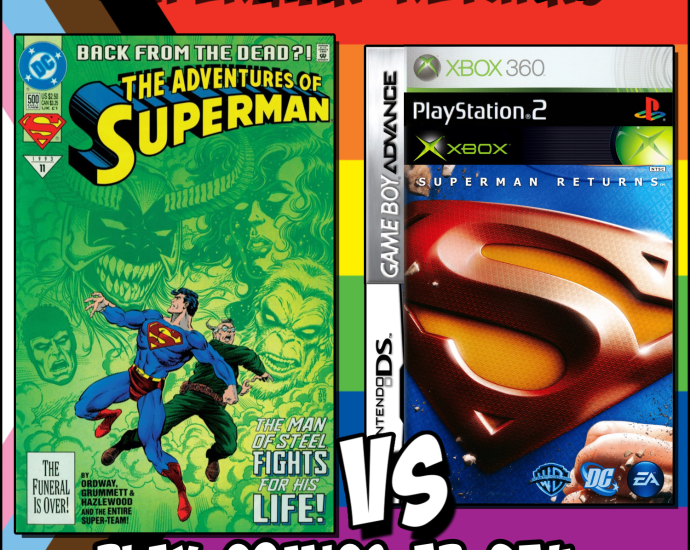
Superman Returns came out in 2006 and asked audiences a very sincere question: what if Superman, but sad? Brandon Routh brooded his way across the big screen, lifting improbable objects and pining for Lois Lane, and somewhere in a boardroom, someone decided this emotionally complex theatrical event needed to be a video game on four different platforms. Five if you count the Game Boy Advance version, which is technically a different game but we’re counting it anyway because we paid good money decided that we just needed to talk about it.

The PS2 and Xbox versions let you fly around Metropolis, absorbing explosions with your face in service of a health bar that belonged to the city rather than Superman himself, which is either a genuinely clever design idea or the most passive-aggressive mechanic in superhero gaming history. The Xbox 360 version turned the whole thing into an open-world showcase for what next-gen hardware could do, which in 2006 meant “look at those buildings.” The DS version was a side-scrolling beat-em-up. The GBA version was something else entirely. Superman Returns contained multitudes, is what we’re saying.

Joining me to dig through the whole sprawling, melancholy, city-defending mess is Adam Williamson, real-life friend, frequent Play Comics guest, and owner of a podcast idea that has been marinating for what I can only describe as a concerning length of time. Adam, I say this with love: at some point you’re going to have to actually make the thing. In the meantime, he’s here, the knowledge is flowing, and we’ve got a Superman game across half a console generation to get through.

So settle in, try not to let the city’s health bar drop to zero, and let’s find out whether Superman Returns deserved better — from Hollywood, from the games industry, and honestly, maybe from all of us.Continue Reading

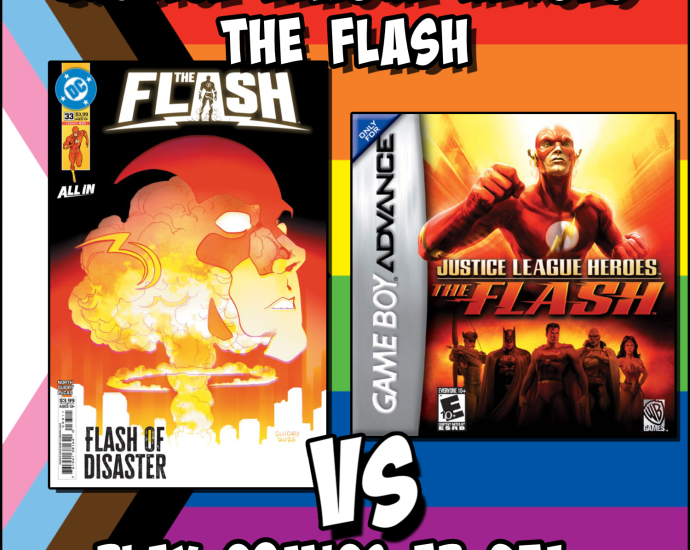
The year was 2006. The Game Boy Advance was winding down, the Justice League animated series had wrapped up, and someone at WayForward Technologies looked at a tiny handheld screen and said, “You know what this needs? The Flash. Running very fast. On a cartridge the size of a business card.” And honestly? Bold decision.

Justice League Heroes: The Flash took the Game Boy Advance, the beloved animated series, and a Justice League comic run and asked the eternal question: how many Rogues can you stuff into a handheld beat-em-up before the whole thing starts wobbling? This episode, we’re finding out. We’re covering the comics, the game, the cartoon connections, and whether Barry Allen or Wally West gets more respect in a world that keeps giving them both the speed force and zero chill.

Joining us to run this whole thing down is Marrilee O’Neil from Fear Coded, who brings exactly the right energy for a conversation about a game that moves fast and expects you to keep up.

So strap in, try not to blink, and let’s do this before the Flash gets impatient and reruns the episode himself.Continue Reading

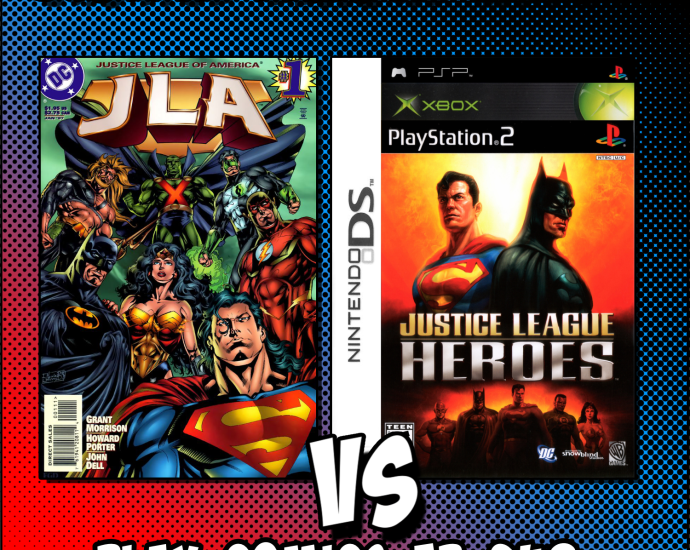
Somewhere in the mid-2000s, a group of developers looked at the Justice League and said, “What if we made a game where all your favorite heroes team up… and then we just kinda vibed with that idea instead of sticking to any specific comic storyline?” Which kind of works actually because they got Dwayne McDuffie to write it but that’s not the point. So anyway, Justice League Heroes burst onto the scene for PS2, Xbox, PSP, and Nintendo DS like a Watchtower alarm that nobody remembers installing.

This week on Play Comics, we grab our capes, charge up our vaguely canon-adjacent superpowers, and dive into a game that absolutely has Batman, Superman, and friends… ummm, friends are definitely there I promise and sometimes they have to be there because of contractual obligations. And sometimes even the best version of those friends if you’re lucky and the best version of that hero had been invented already.

Joining the adventure is Gavin Mevius from The Mixed Reviews and The Q Division, bringing along just the right blend of insight, chaos, and “wait, was that ever a comic plot?” energy to help us make sense of it all.

So get ready for teamwork, button mashing, and a Justice League game that is just kind of meh, especially considering the story that it had to work with.Continue Reading

Holy cowl-wearing console catastrophe, comic crusaders! This week on Play Comics we’re grappling-hooking our way into the surprisingly deep shadows of 2005’s Batman Begins video game – because apparently someone at Eurocom looked at Christopher Nolan’s gritty reboot and thought, “You know what this needs? A fear meter and the ability to summon actual bats to terrify thugs into submission!”

Released across more platforms than Batman has traumatic childhood memories, this movie tie-in somehow managed to land on PS2, Xbox, GameCube, and Game Boy Advance without completely embarrassing itself in the process. While most movie games crash and burn faster than if I tried to drive the Batmobile, this stealth-action adventure actually tried to do something interesting with its “High Frequency Transponder” gadget and environmental intimidation mechanics that made enemies drop their weapons in sheer terror.

Joining us for this digital descent into Gotham’s criminal underworld is the incredibly talented Wells Thompson, creative mastermind behind indie comic sensations and the brilliant mind that helped bring us The Scorpion and the Queen (among a bunch of other Kickstarter projects) and the force over at WellsThompson.com. Wells brings his unique perspective on comic storytelling and adaptations to help us figure out whether this game captured the essence of both the Dark Knight’s origin story and Nolan’s cinematic vision, or if it belongs in Arkham Asylum alongside the rest of the movie tie-in disasters.

From the surprisingly robust stealth segments that actually rewarded patience over button-mashing, to those Batmobile sequences that had us questioning our life choices, we’ll explore how this Eurocom-developed title managed to be the last Batman movie to get a proper video game adaptation – and whether that’s a good thing or a tragedy. So grab your utility belt and join us as we investigate whether fear really is the best weapon, or if this game should have stayed in the cave where it belongs!Continue Reading